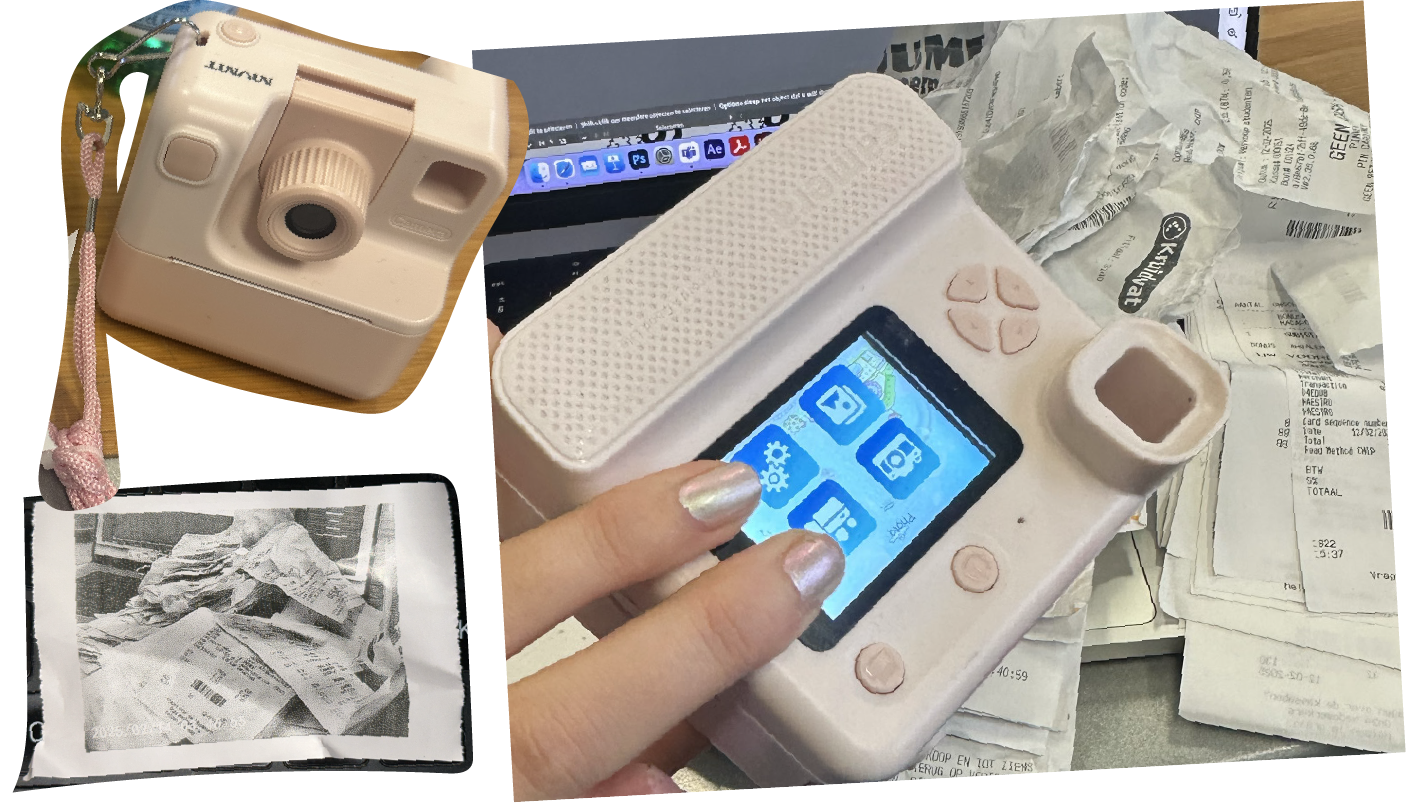
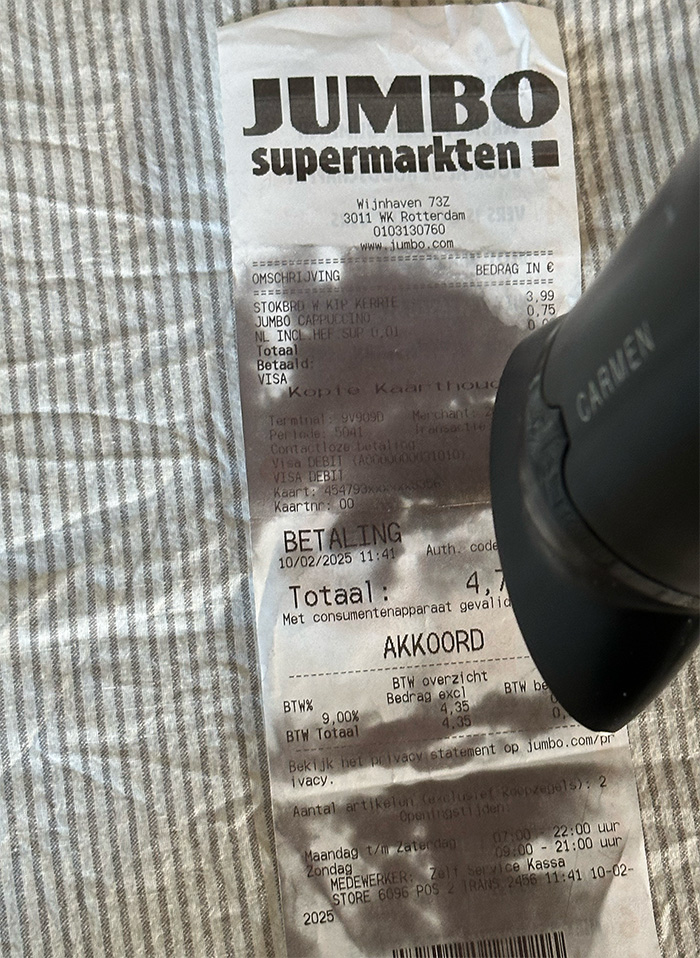
I aimed to see how I could heat the thermal receipt paper and if it had different stages of heat, like how long I put the heat on it the deep black it would become. Also, could the thermal paper turn back to white if it has been cooled back down, for example by ice?
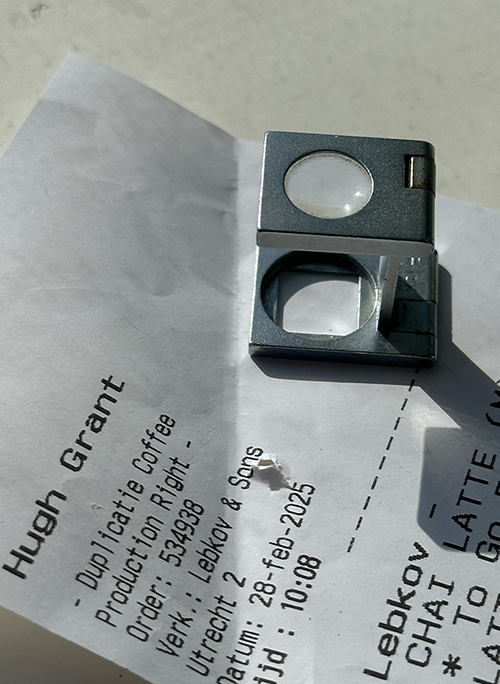
I also aim to try to heat the receipts with the sun. I have a small magnifying glass, sun, and thermal paper.
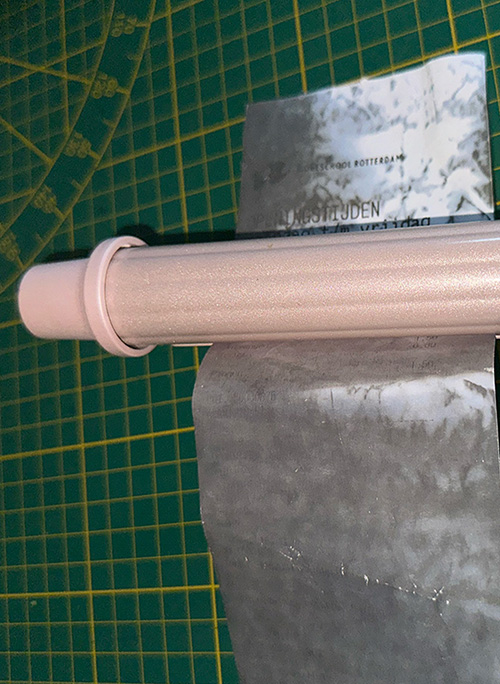
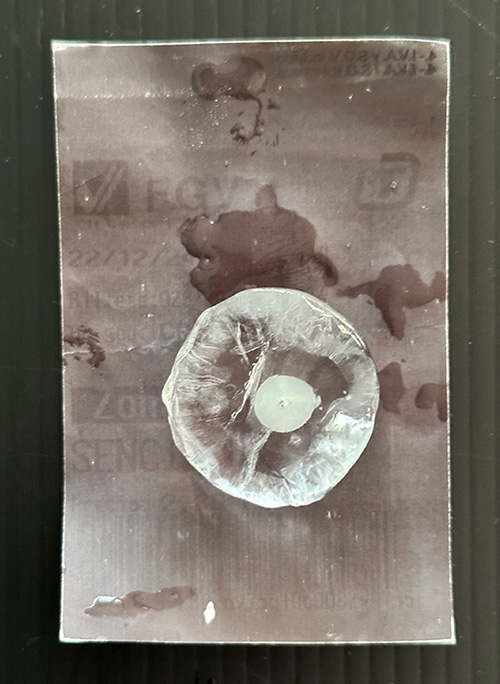
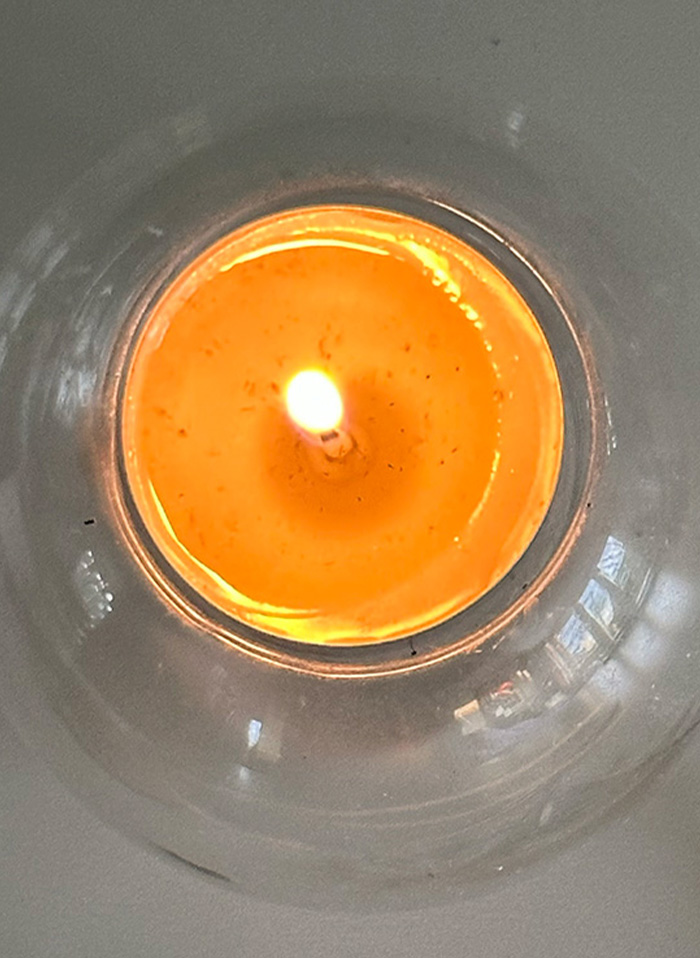
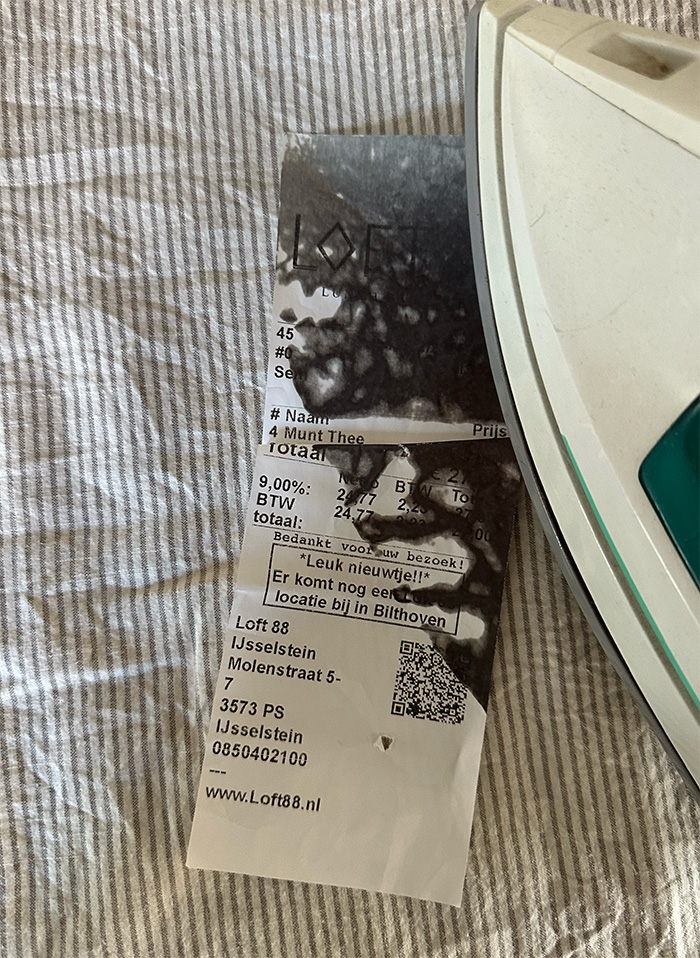
01 - First I tried working with a curling iron to make the receipt fully black. 02 - Following up I did the same but now with the iron and hairdryer, but the results where the same. 03 - Here you see the differences in black. 04 - Now I tried to see if there is different results of timing the heat onto the receipts paper. 05 - I tried cooling down the paper with an ice cube, It did not work. 06 - I thought of heating the receipt with the flame of a tea light, could not work as precies. 07 - I than decided to draw with a safety match, this worked much better.
Working with the curling iron, iron, and hair dryer, you can efficiently and quickly make the receipt completely black. There is no color difference between them. The color is only different, a bit more purple or gray in some, but this is just the way the paper/coating layer works. As soon as you touch the thermal paper with full heat, there is no difference in the outcome of how deeply black it becomes. You only have a gradient difference if you approach the heat from a distance on the paper.
Unfortunately, the small tests I did with the sun and whether the receipt would turn back white after it had been burned didn't work. It made a lot of sense in my head, but when the paper is burned, this cannot be undone.
Now I know better how to deal with it and how the heating process works.
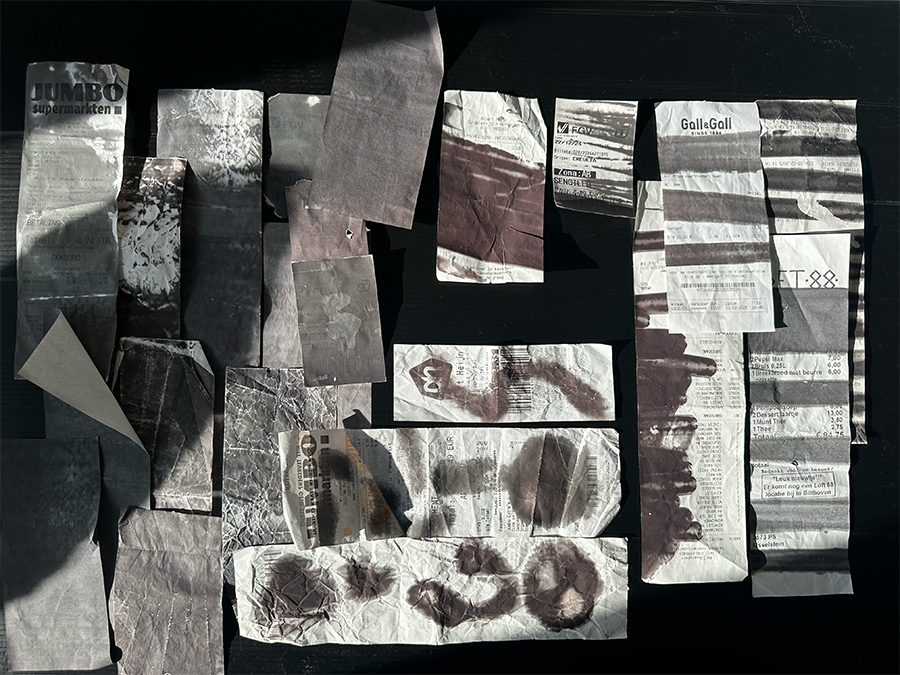
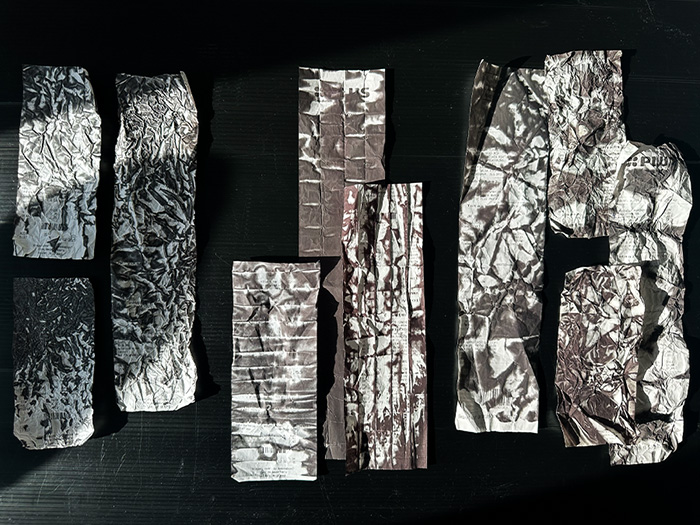
While I was working on experiment 01-Heating, I found out that when a receipt is wrinkly, and you heat it carefully, it creates a cool effect. With this experiment, I’m trying different methods to create different outcomes.
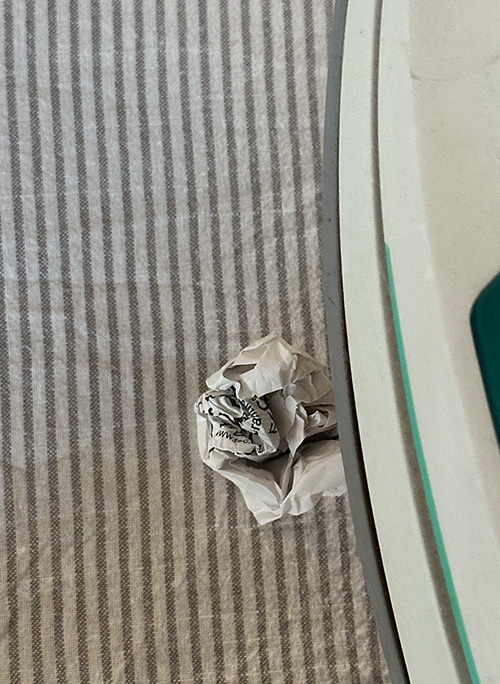
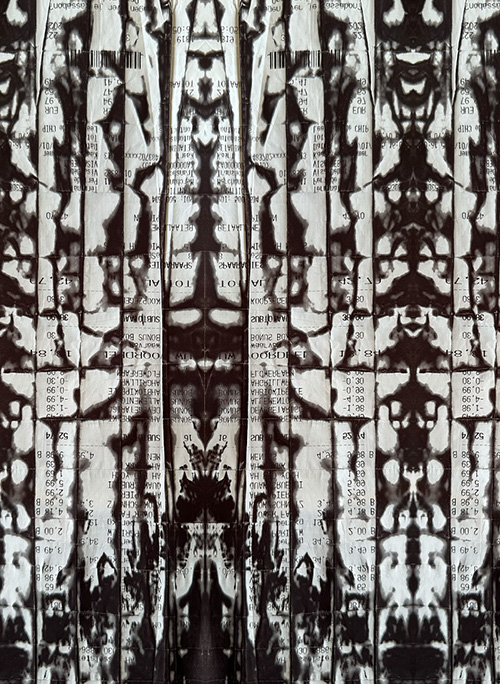
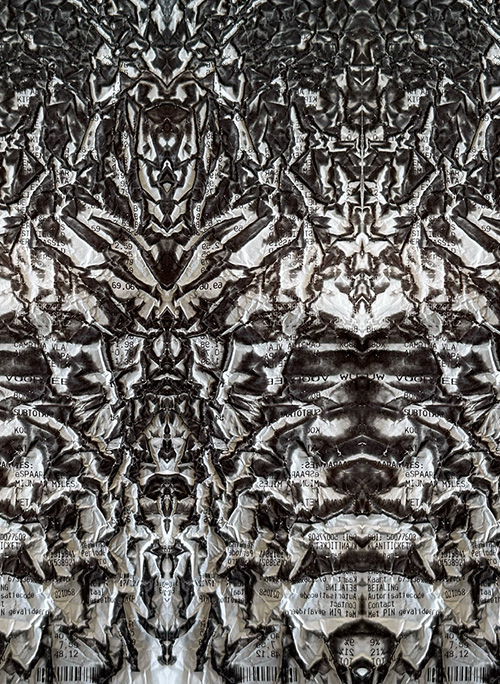
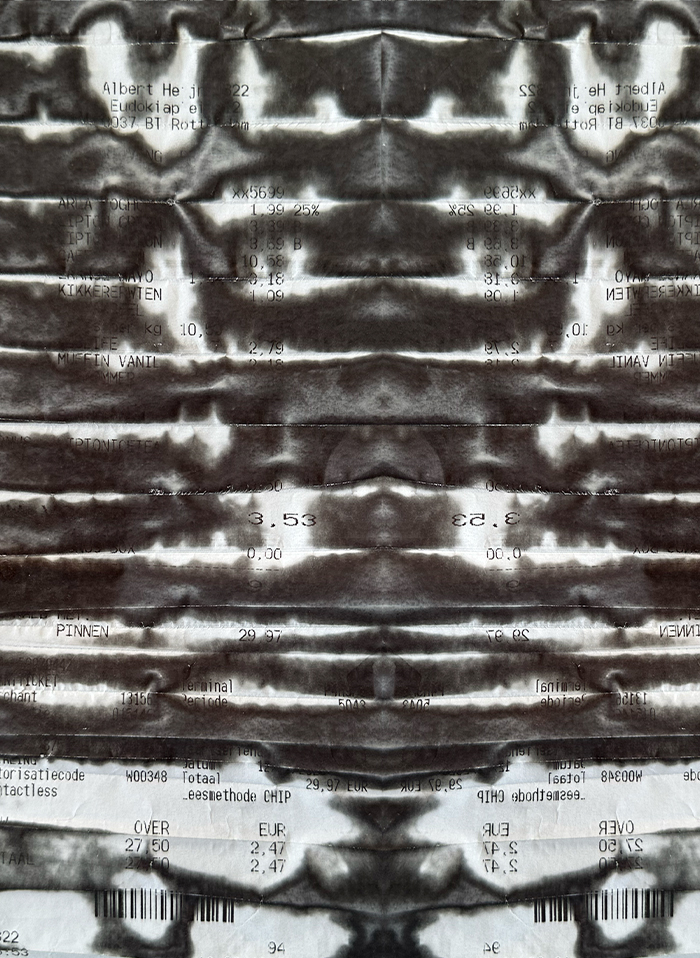
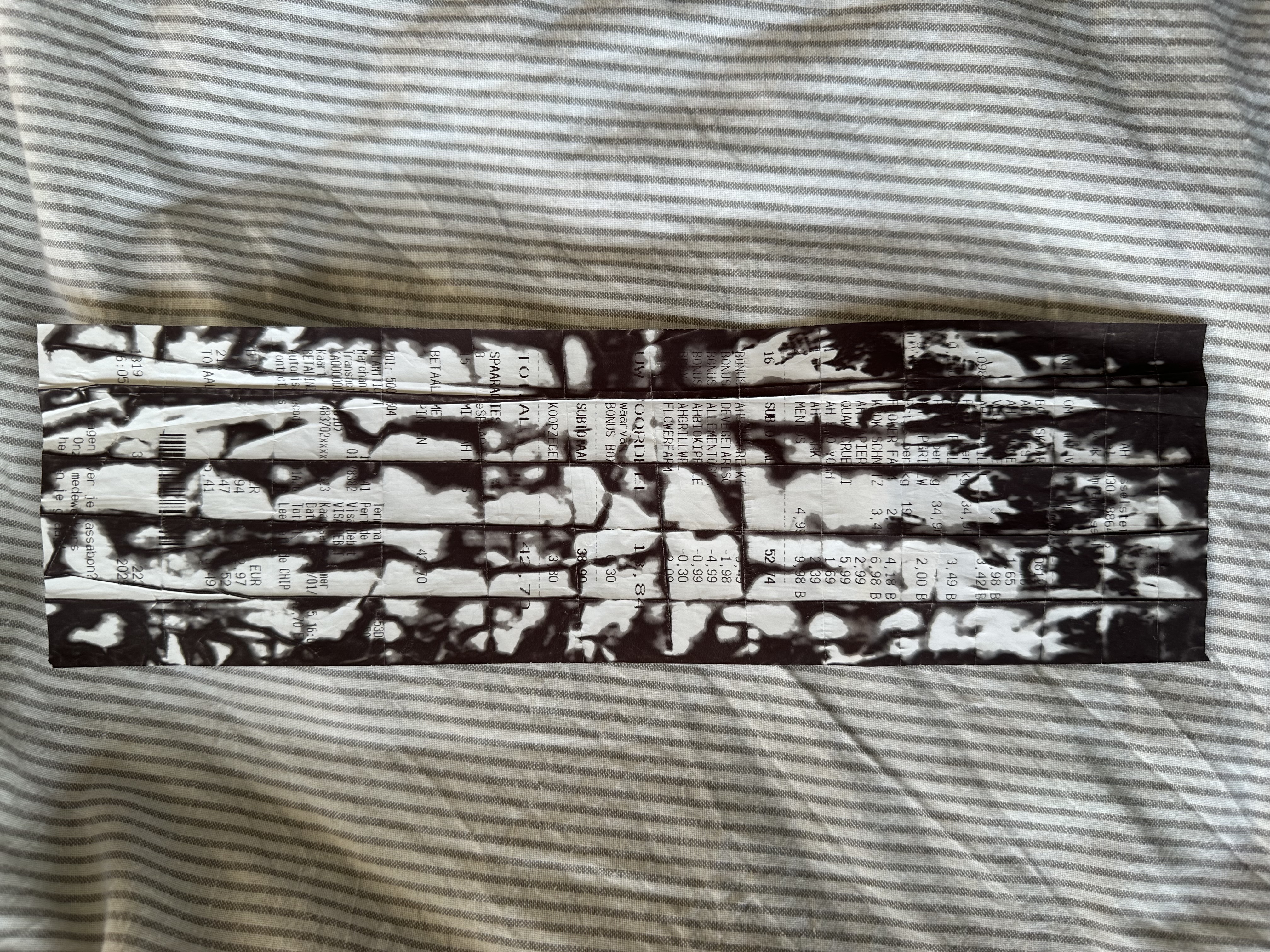
01 - I crumpled up my receipts, then carefully put the iron machine on it. 02 - I tried that a few times, and it reminded me of the tie-dye class we got from the intro station week, where we folded the fabrics, bound them in certain ways, and dipped them into the dyes. When we would unwrap them it had a piece of cloth that did not have seen the ink, because of the folds and bins. So I tried this technique but not with dye , with heat. I folded and crumpled it the receipts up in some more ways. 03 - In some of the receipts I saw a pattern, so I scanned them in and put them next to each other.
The result of this experiment is certainly not a dead end, I think it looks very interesting visually. I just don't know yet how far I can take this technique, but it will certainly stay with me.
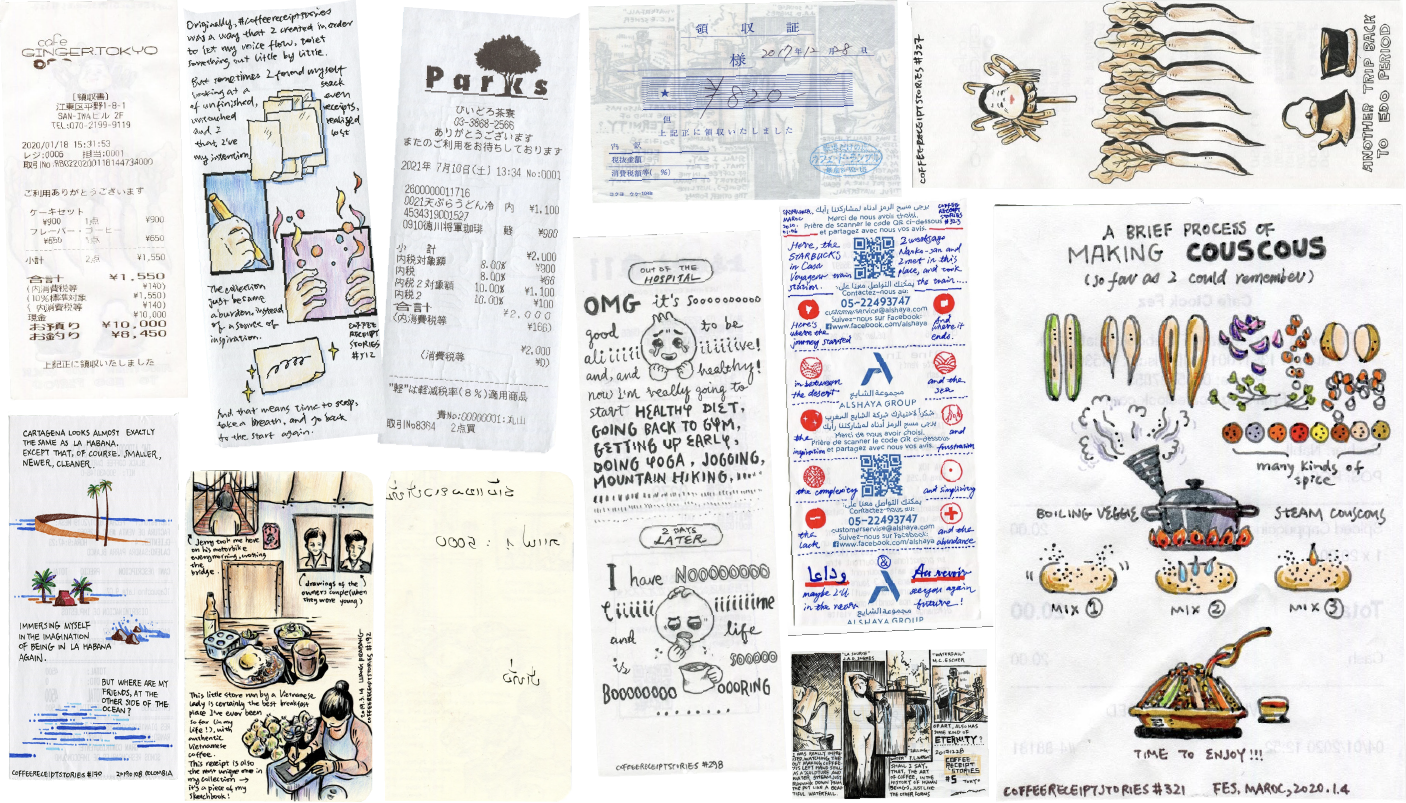
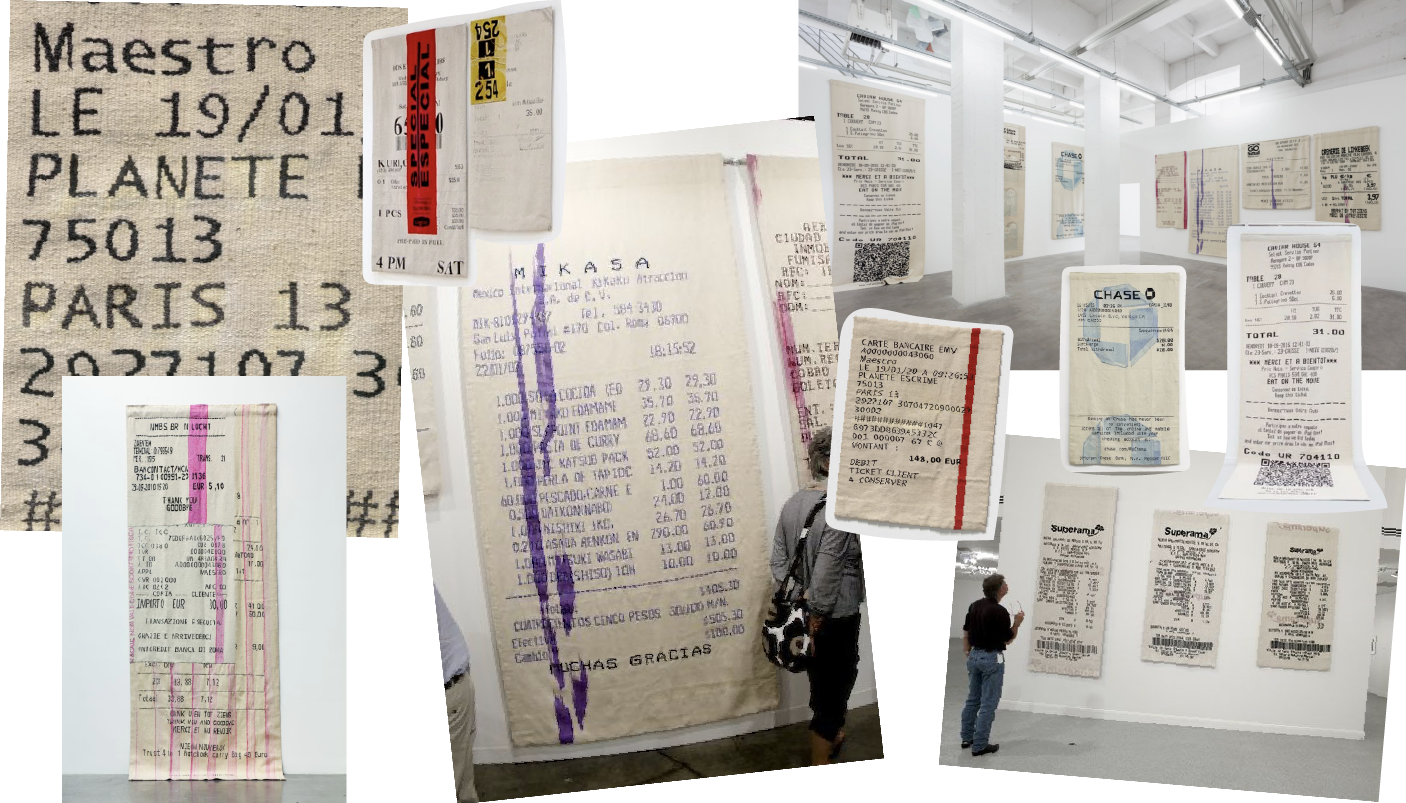
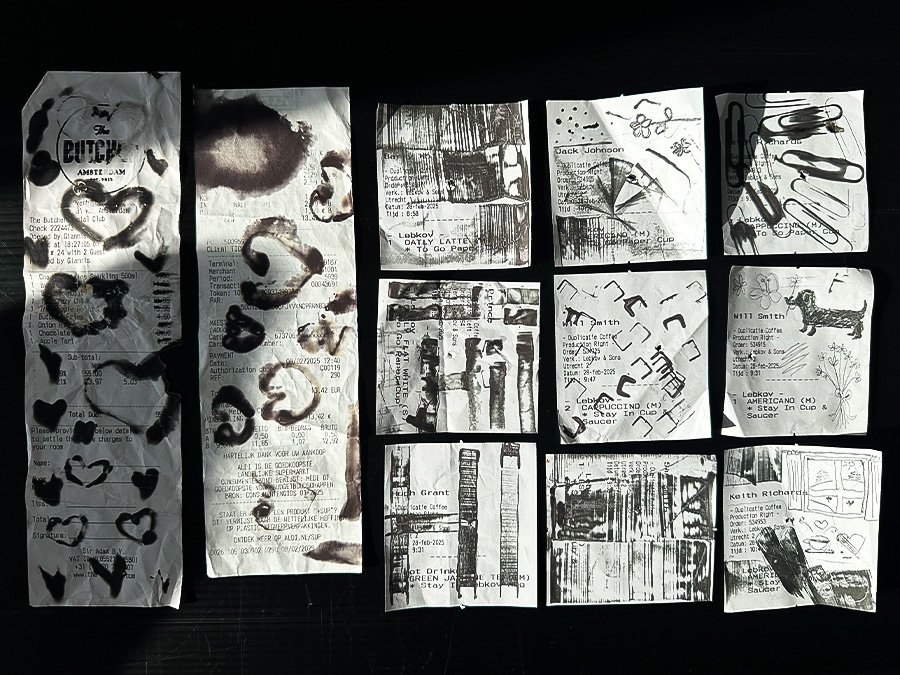
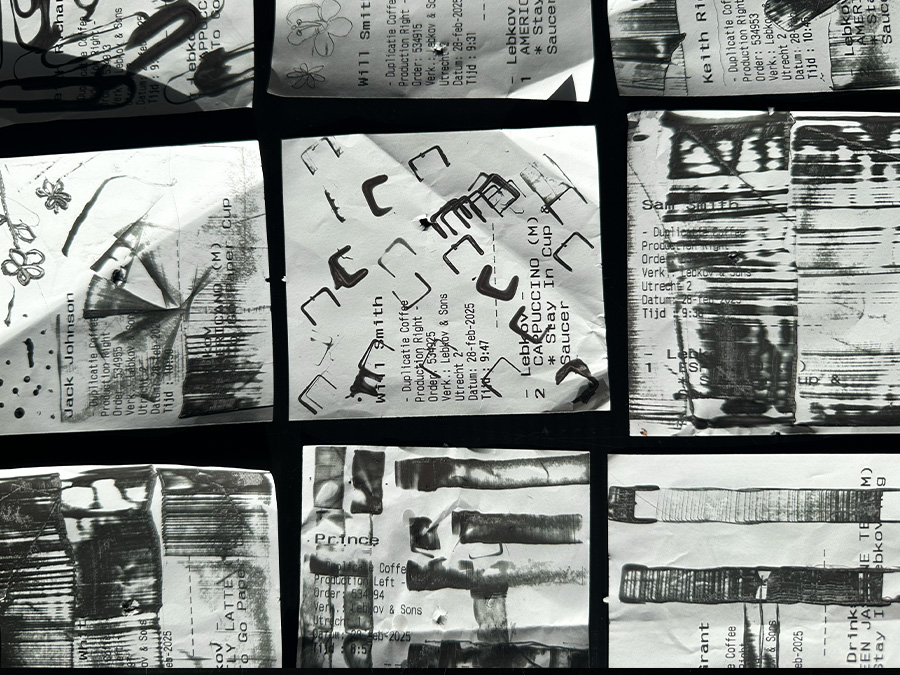
I though of the work Coffee Receipt Stories, and wanted to try to draw on the receipts as well, only not using pen en pencils, but heat. How could I control the heat and make precise lines to draw?
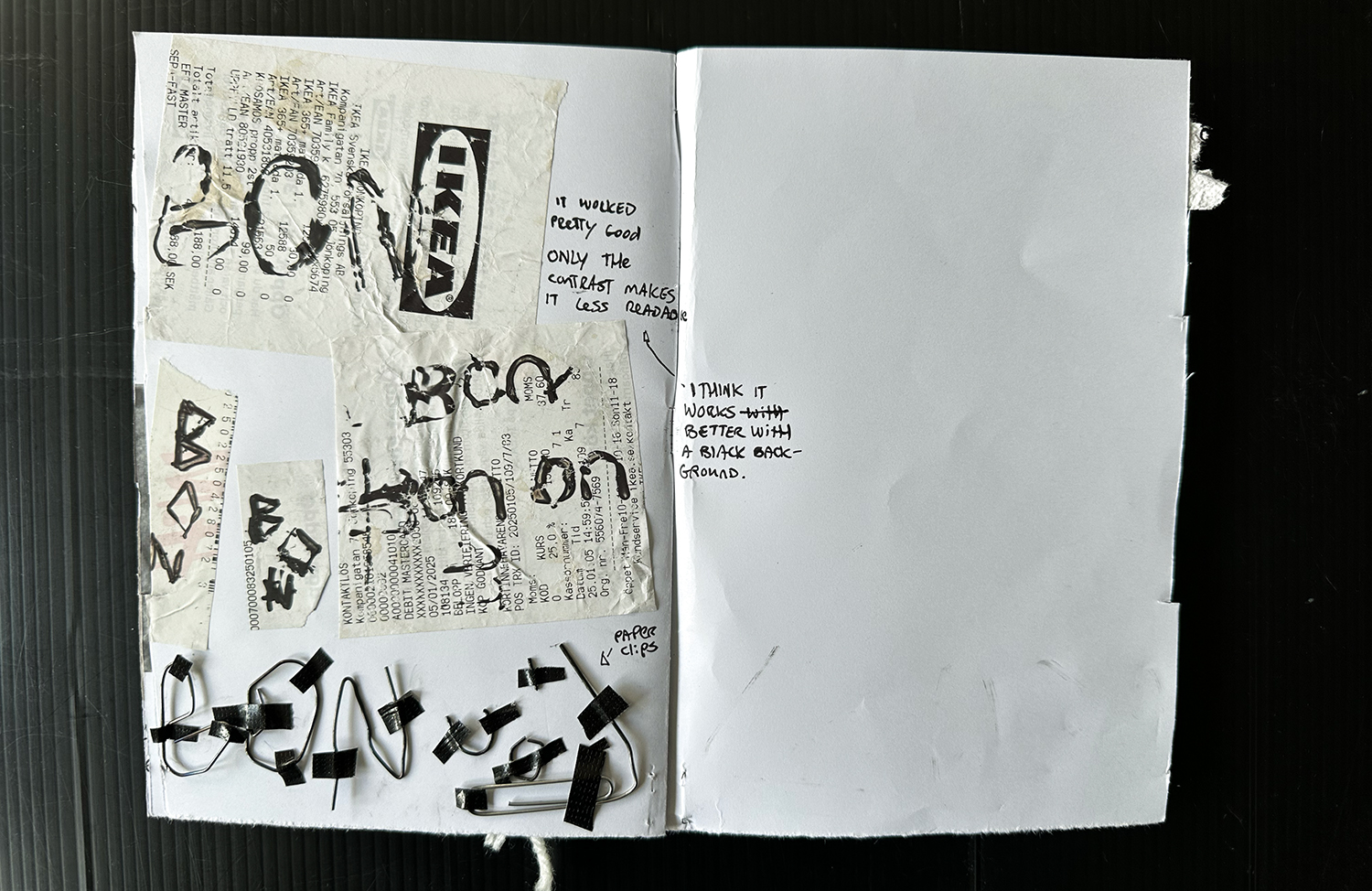
01 - I already knew that drawing with a flame did not work (experiment 01). But I now tried drawing with an old safety match and re-heating it. 02 - I continued with a piece of iron wire/paper clip and some staples. 03 - I tried drawing lines and coloring in, and I created this distorted texture.
If I would like to continue with the drawing, working with the tips of the paper clip works the best, is the most precies. I really like the way you can make textures. I could use these in, for example, Photoshop as a blend mode.Unfortunately, the small test of whether the receipt would turn back white after it had been burned didn't work. It made a lot of sense in my head, but when the paper is burned, this cannot be undone.
Now I know better how to deal with it and how the heating process works.
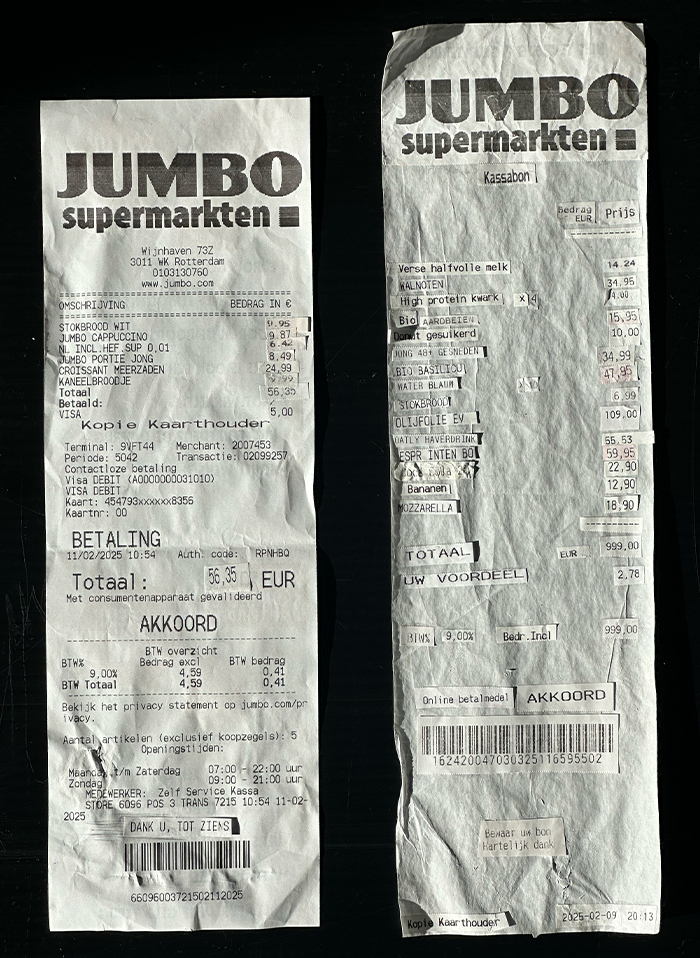
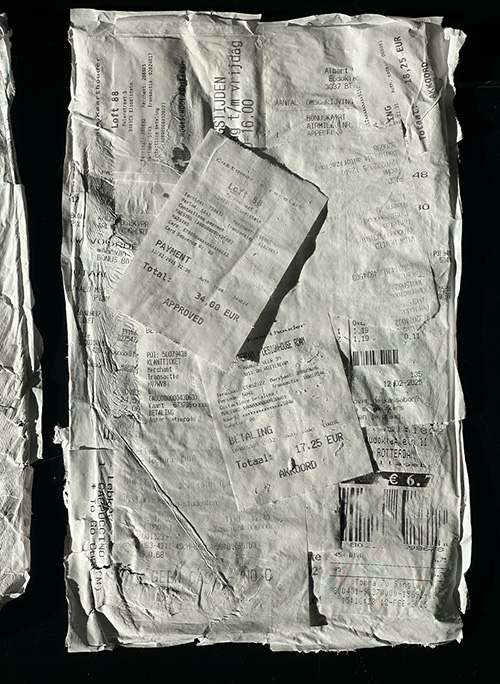
My thinking behind this idea/experiment was that groceries, and besides almost everything, have become so prohibitively expensive. To emphasize this, I want to switch the prices and translate this as a story.
01 - Finding a receipt in my collection that shows some basic products. 02 - Look among the other receipts to see if the information matches so absurdly. 03 - (A new receipt) I made this completely ink-free by... 04 - I want to do the same as the first step, but now completely from scratch, cutting and pasting everything.
The outcome was not surprising, it was more of a stuck idea that I had in mind. I do think that this would make a great image on a poster, telling a story that due to inflation, politics, scarcity, and things going on in the world make life so expensive.
Now I know better how to deal with it and how the heating process works.
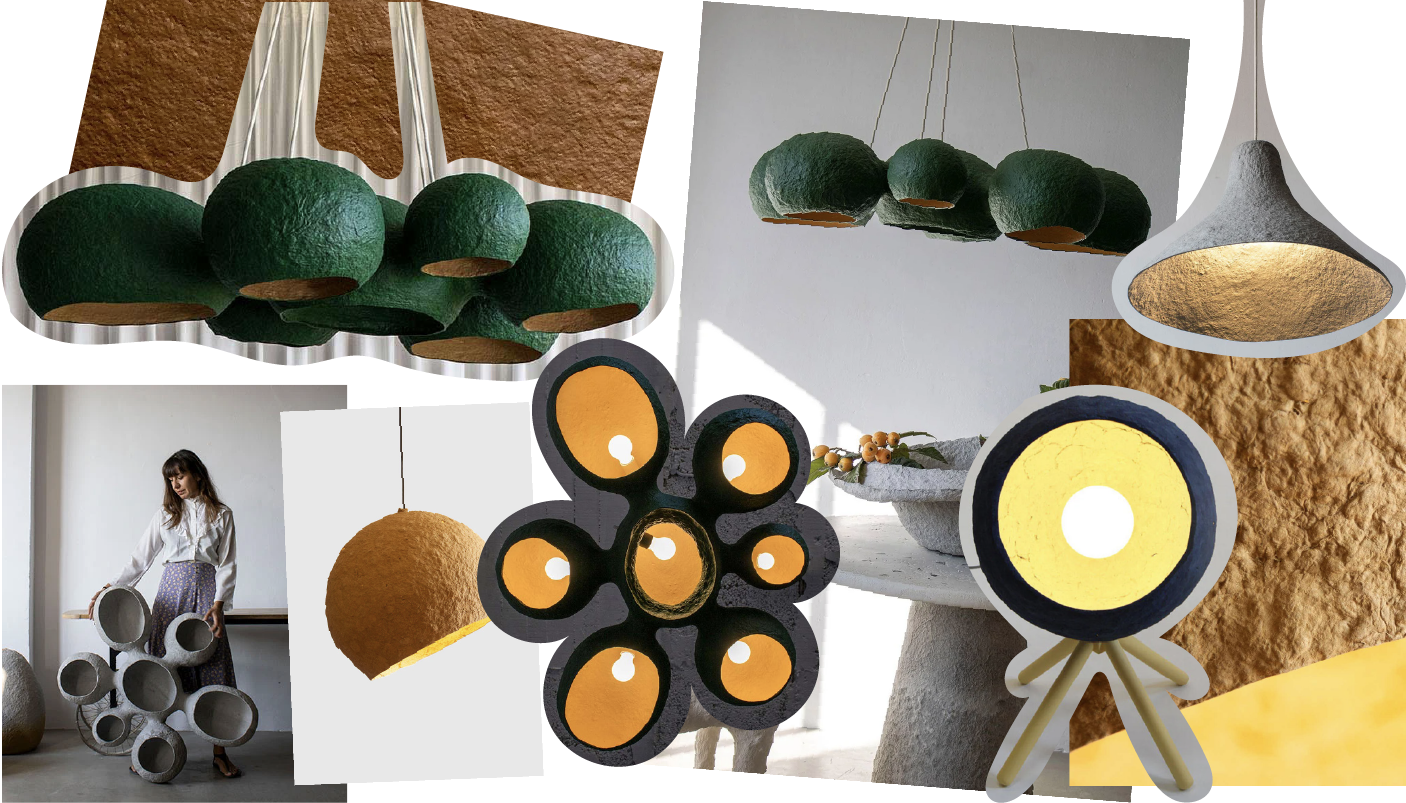
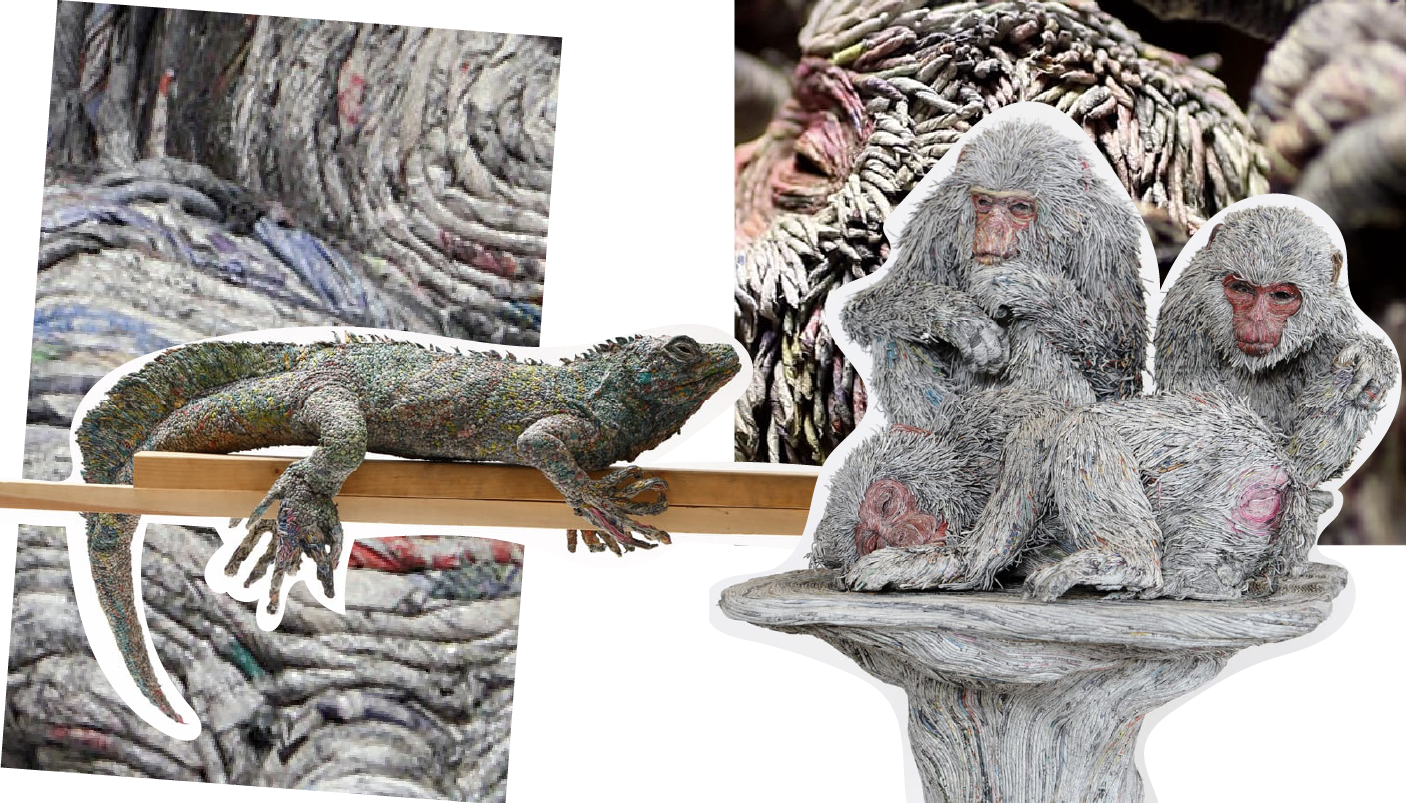
I really like the idea to recycling the receipts into paper, so it can be used again! So im aiming to do so and if everything works out I would like to make a small sketch book where than every page is different. It reminded me of a sketch book I recently bought Make&Mend.
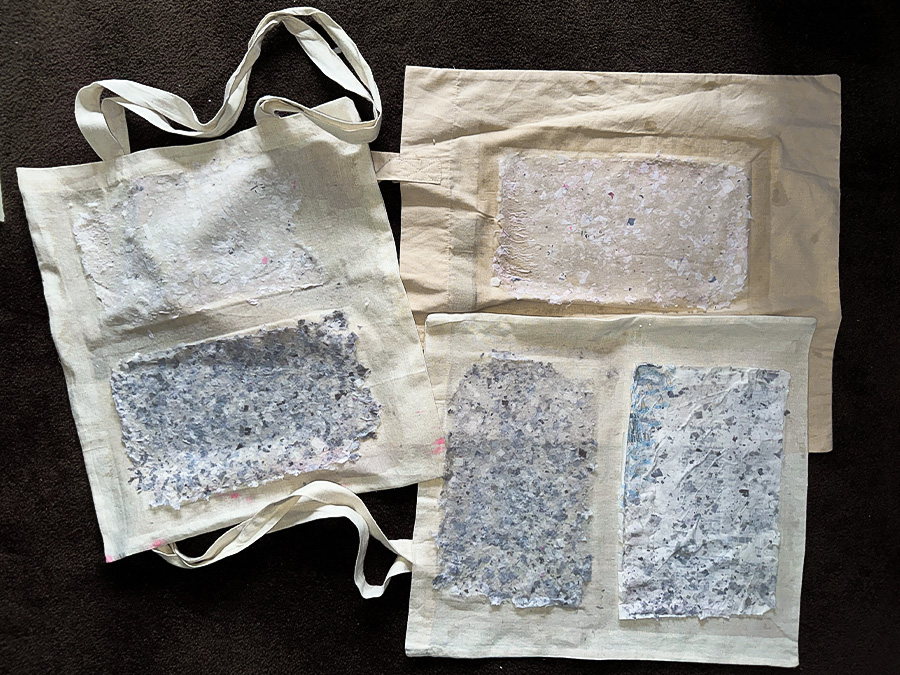
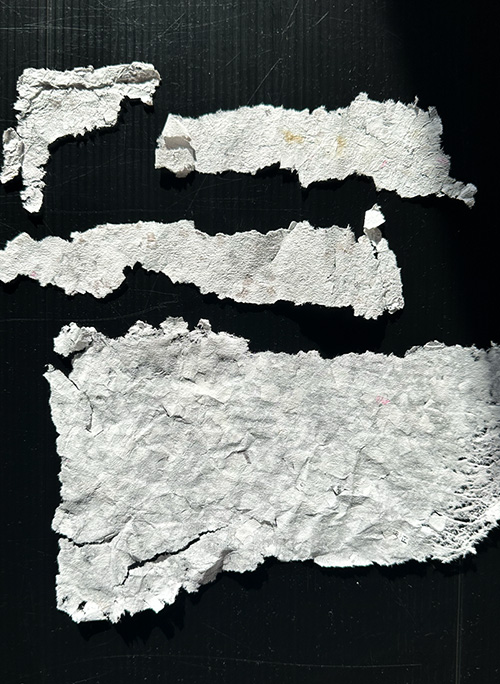
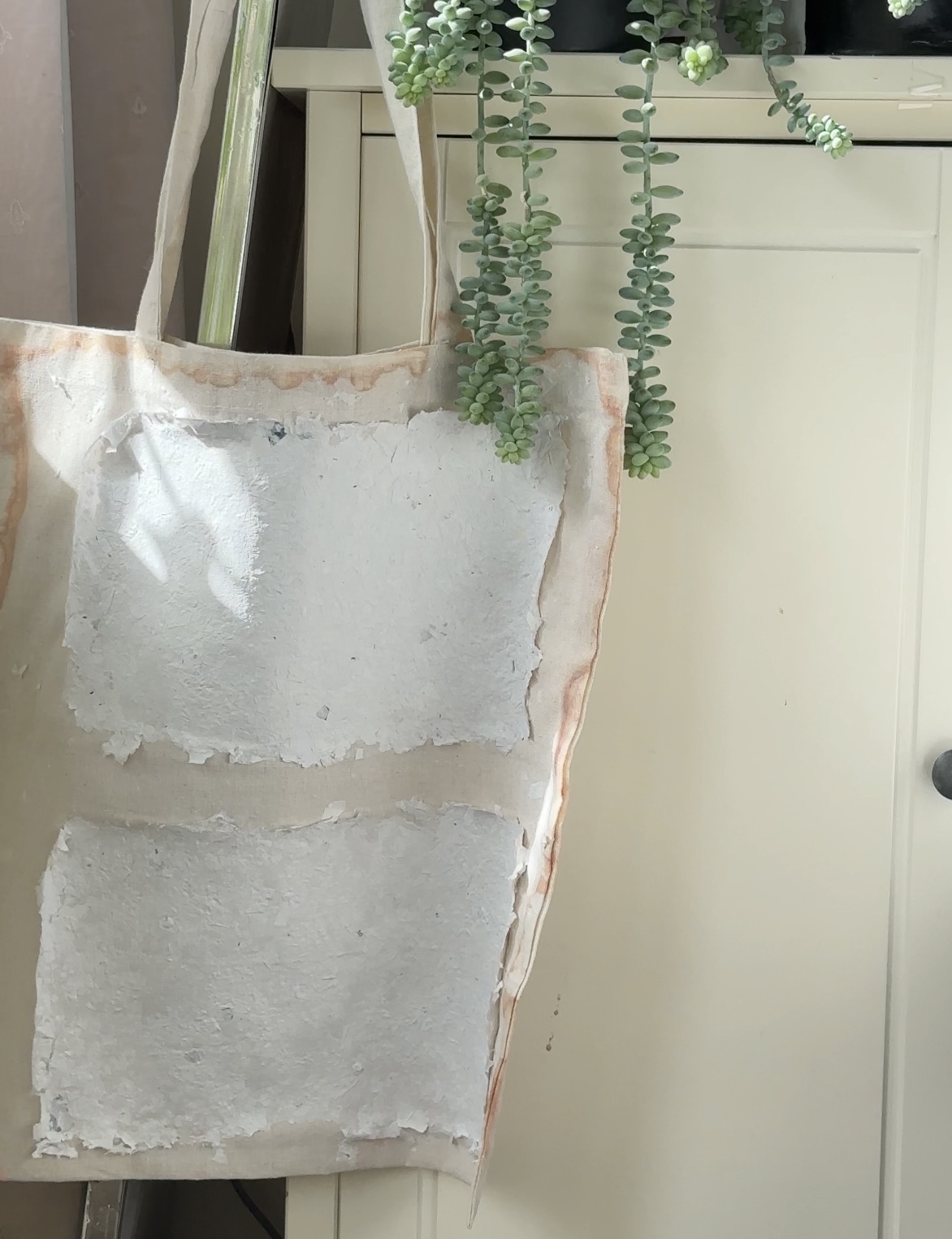
01 - I tore about 20 white receipts and since I had a lot of black heated receipts I had done the same. 02 - infuse in water overnight. 03 - squeezed a lot into the water and made larger pieces smaller (I don't have a blender at my disposal). 04 - Put this pulp in the water and create the paper with a sieve. 05 - Let it drain on an old linen bag.
Either the receipt paper is too fragile and therefore not strong enough, or I have not made enough pulp. I could barely get the paper loose from the linen bag, it was too thin. I'm going to try this again and differently. Use more pulp or a full receipt as a kind of glue.
I thought the difference between the white and black paper would be more subtle. If I wanted to make a sketchbook, the paper would be too dark to sketch on. Now I know better how to deal with it and how the heating process works.
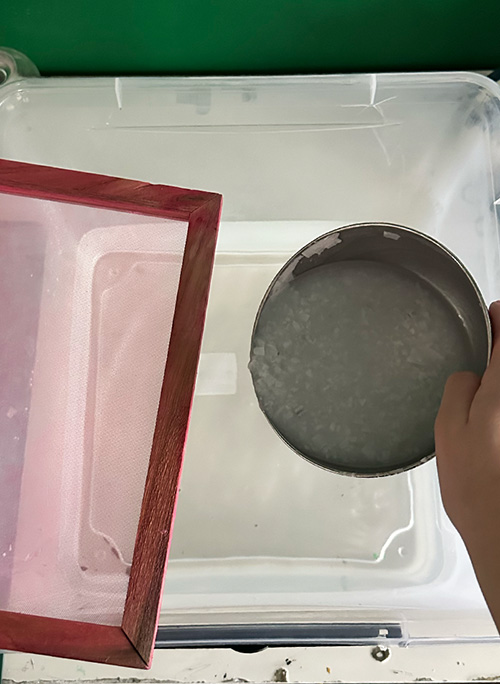
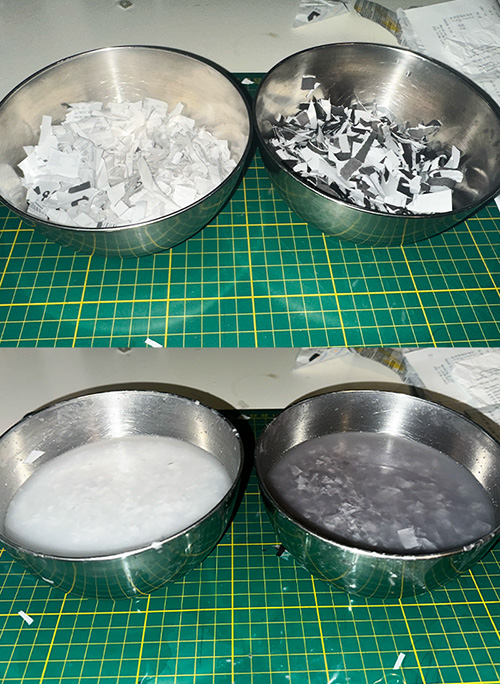
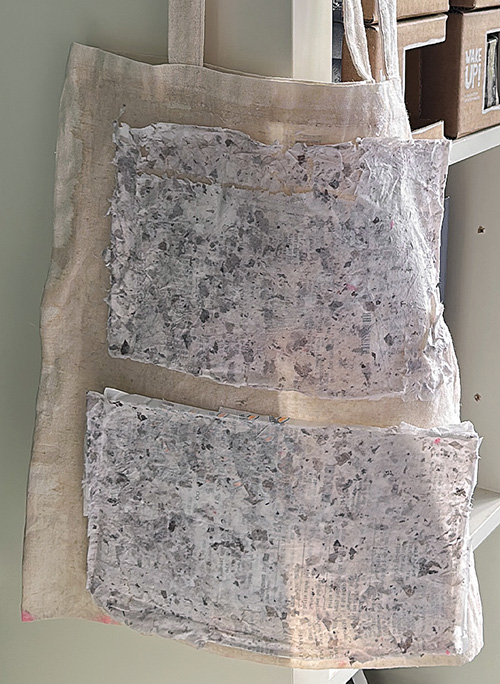
I have some leftover pulp from the previous experiment which I will use. I also will reuse some scrap pulp that did not come off of the linen and the black “paper”, because I did not find this useful. To make the paper stronger this time I want to use full wet receipts as a reinforcing layer, as if it were glue.
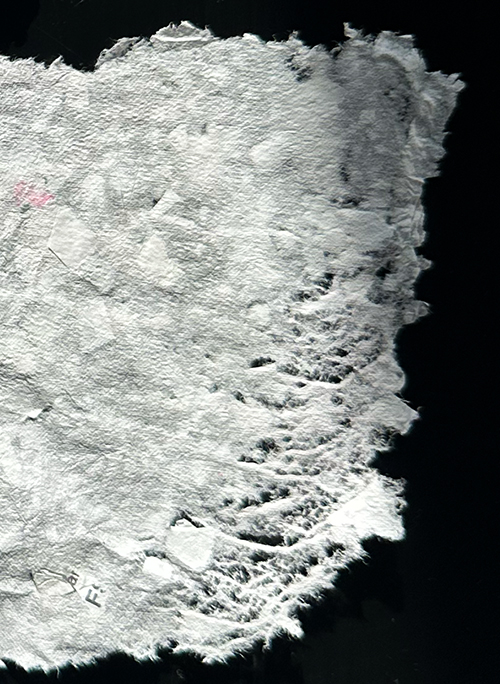
01 - I did the same first few steps as the previous experiment. 02 - When the pulp in the sieve started to leak, I immersed entire receipts in water. 03 - I placed the soaked receipts on top of the sieve to create an extra reinforcing layer. 04 - I tried to make one that had multiple extra layers.
It works in a way, but it's not perfect yet. Some receipts are coming loose and it just doesn't feel like a whole. Working alone with pulp, as in experiment 05, feels much more like a whole. Maybe I can try adding a little glue to the water mix so that the receipts can stick together better and not come loose. Because I think the effect of seeing the entire receipt at the back is really cool.I thought the difference between the white and black paper would be more subtle. If I wanted to make a sketchbook, the paper would be too dark to sketch on. Now I know better how to deal with it and how the heating process works.
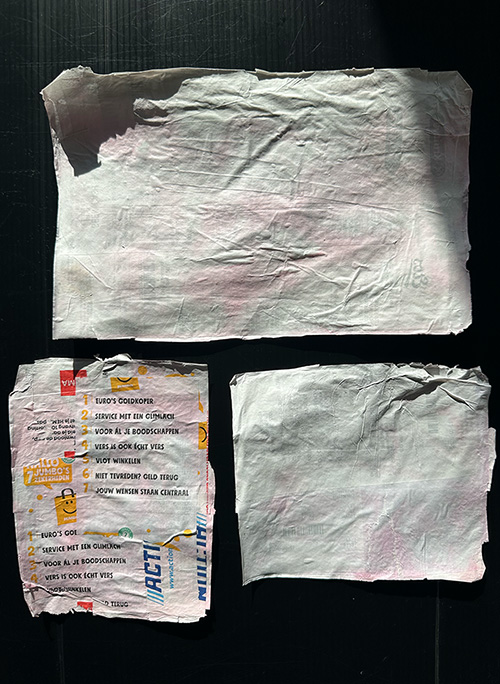
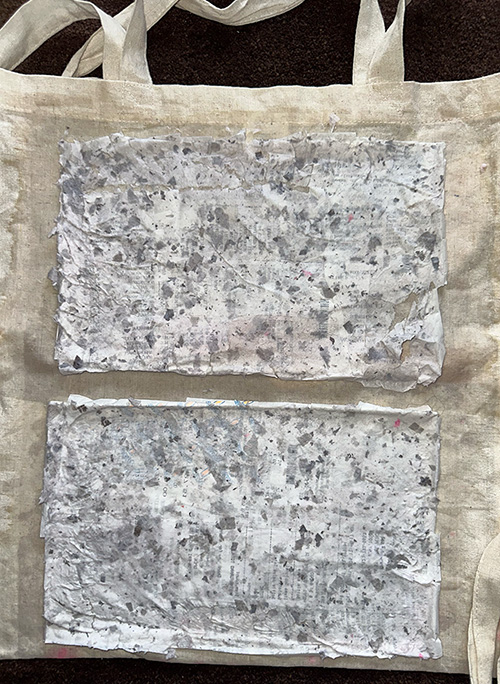
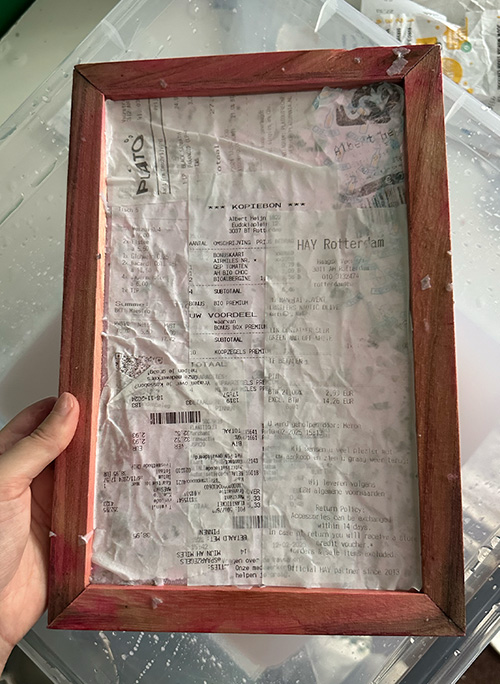
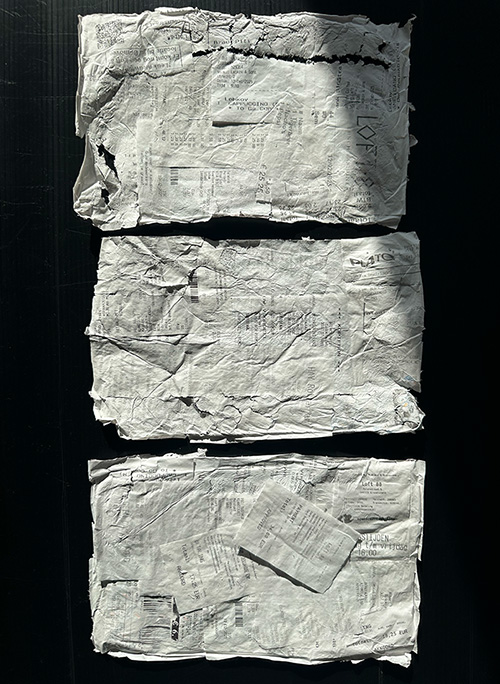
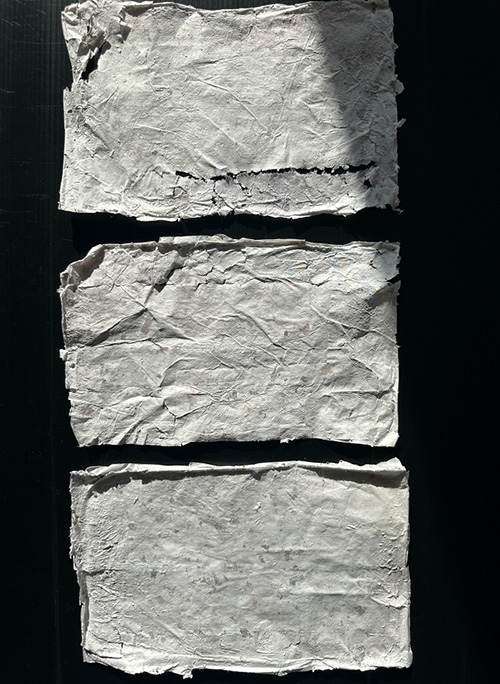
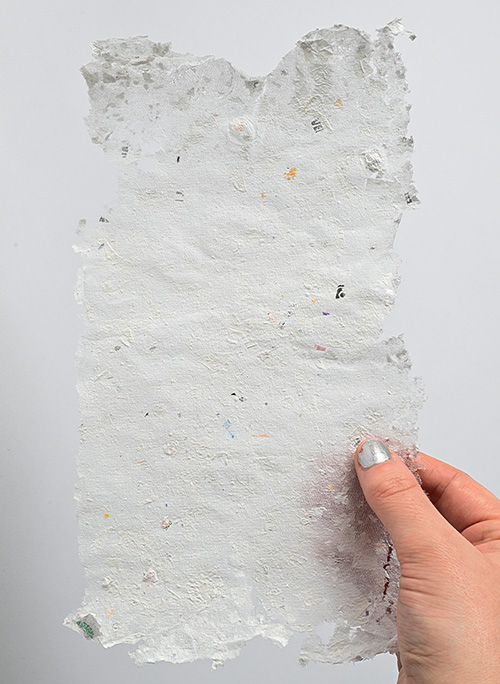
Re-making the paper using pulp, not the full-on receipts. The only difference is that I will use more of the thermal receipt paper.
01 - The same steps as experiment 01, only I used much more receipts paper into the water mixture. 02 - I left the mixture for 2 days, every once in a while I stirred it. 03 - hang and let it dry.
Now that I have found a better balance in the amount of paper that I've used, I was able to easily remove the paper from the cloth when it was dry.
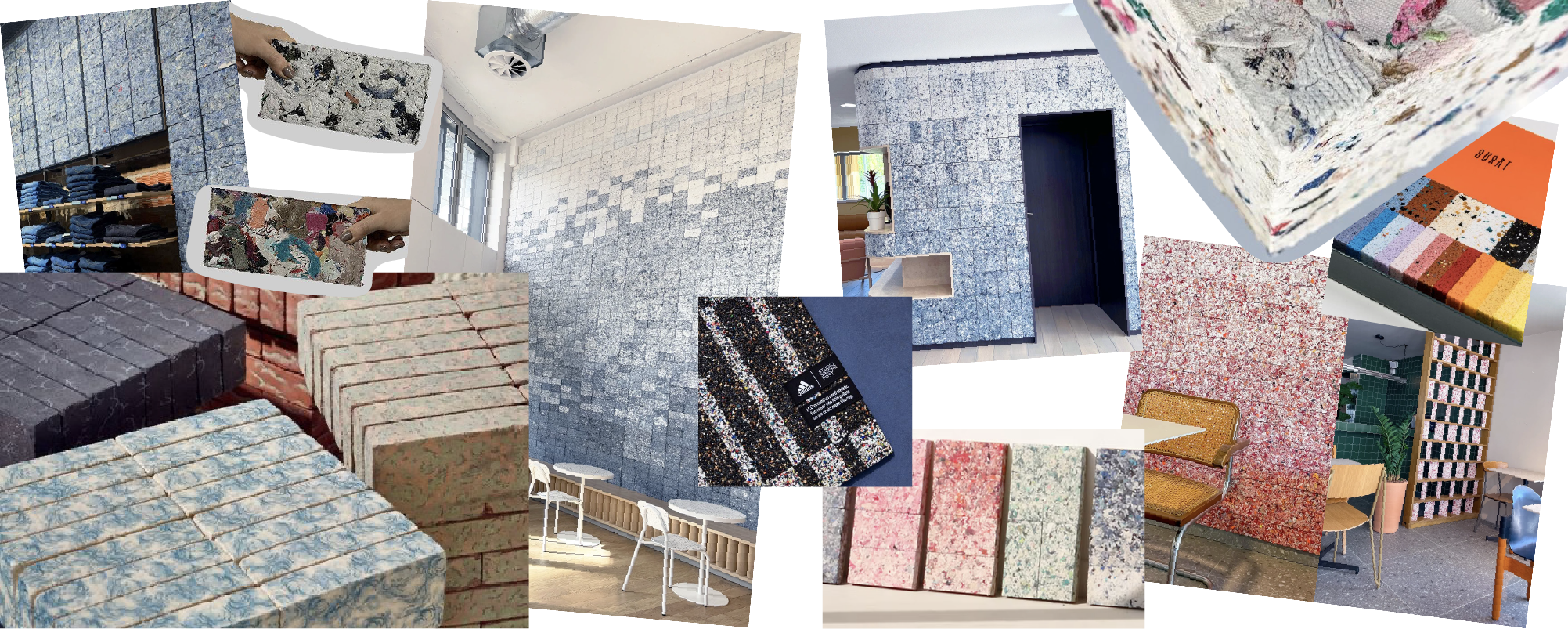
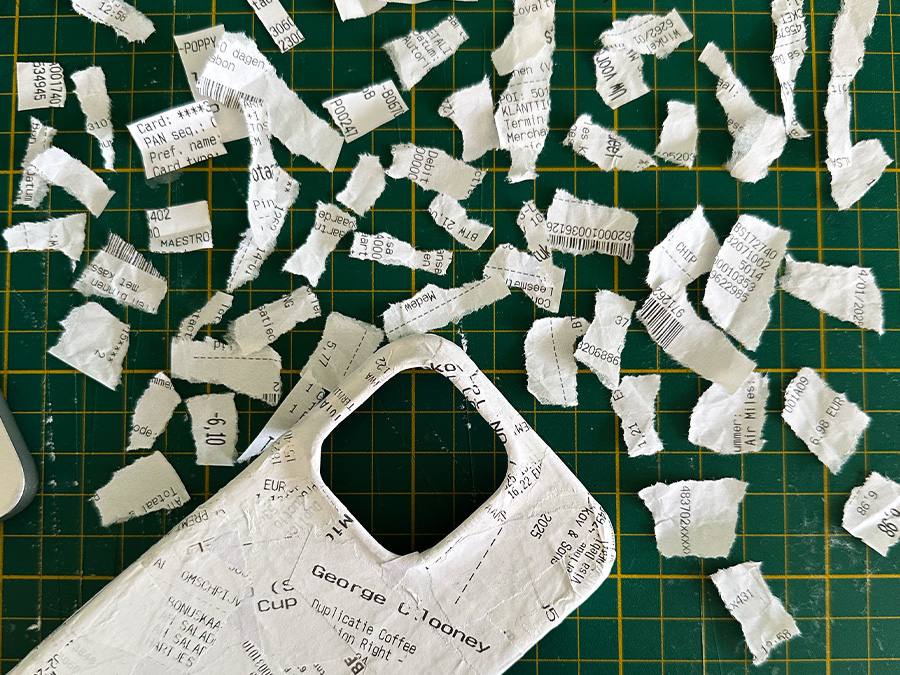
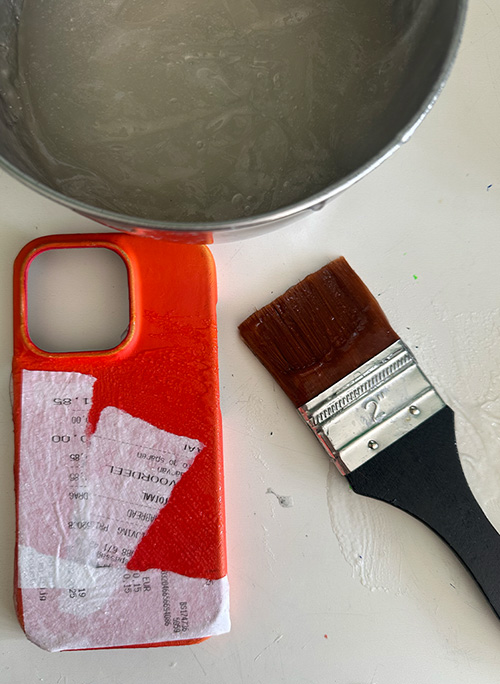
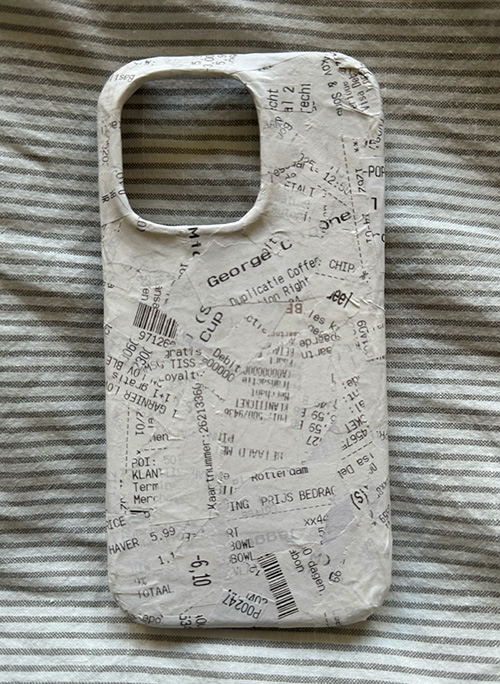
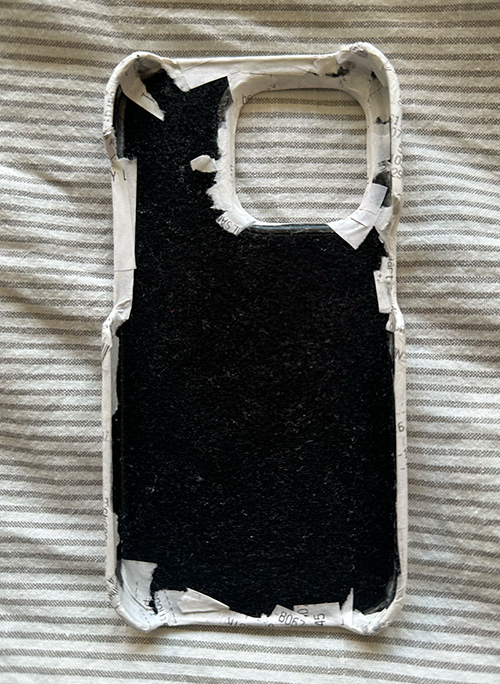
Well, I could imagine that a phone case could look cool if it were made from up-cycled receipts. I envisioned making a molt and shaping it with paper mache. But to start with, to see if I thought it was worth using a molt, I used an old phone case.
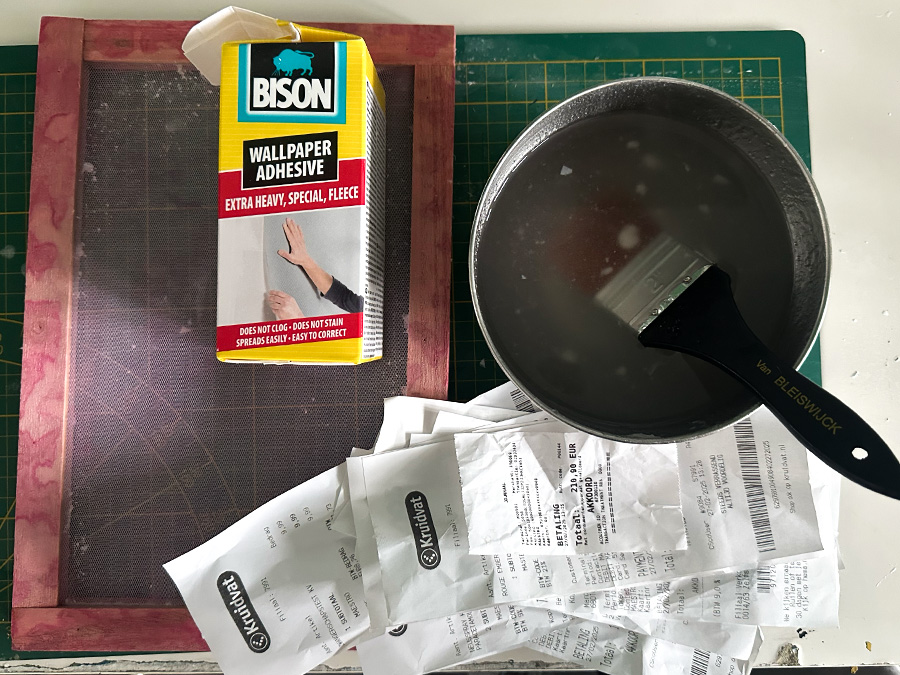
01 - Making the paper mache mixture with water and wallpaper paste/powder. 02 - Tear the receipts into small pieces. 03 - fist layer, letting dry over night, than second layer swell as the edges. 04 - letting completely dry, than coating it with modpodge.
It was so much time consuming, for no reason, and I don’t love the results. Im happy that it was just a test, did not bring me any new/more insights.
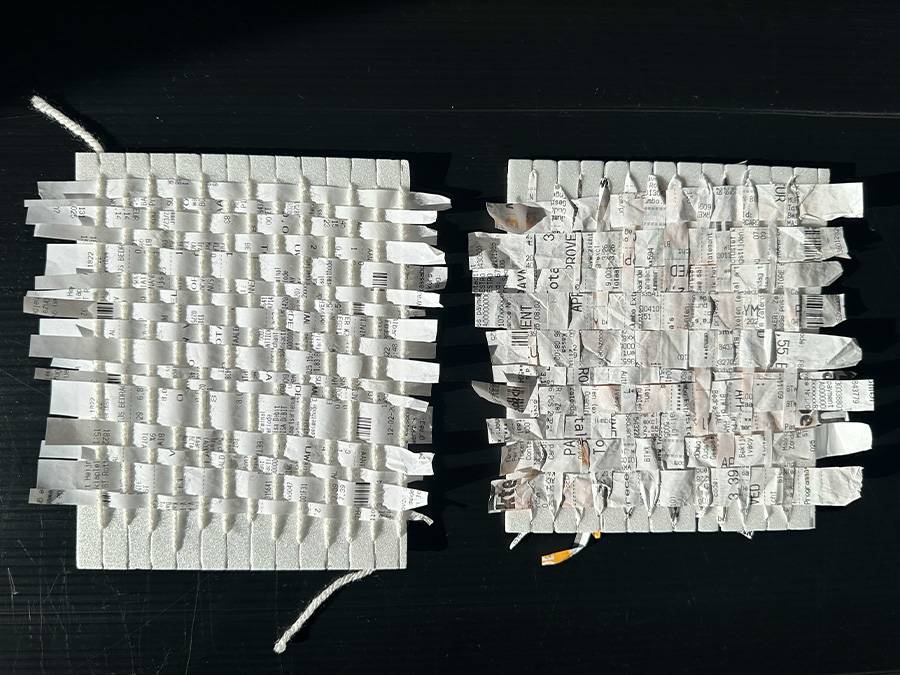
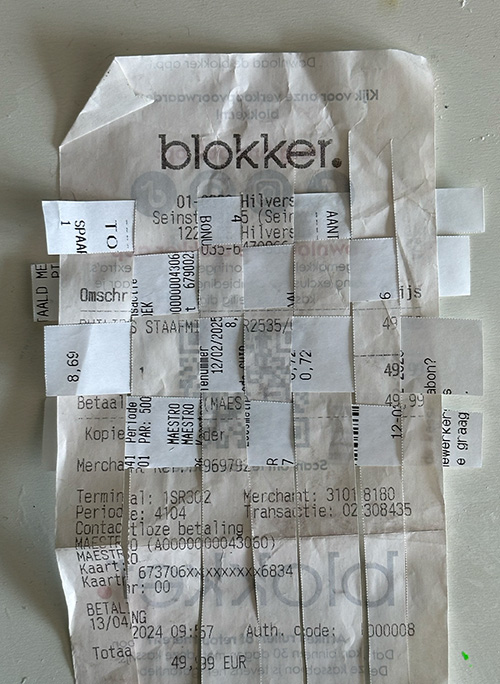
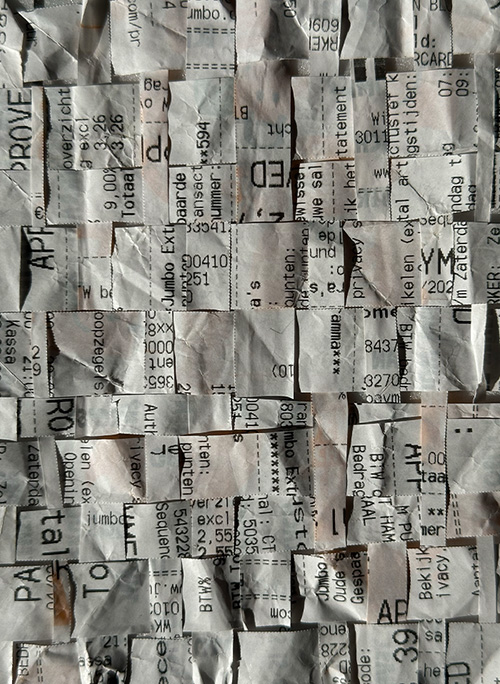
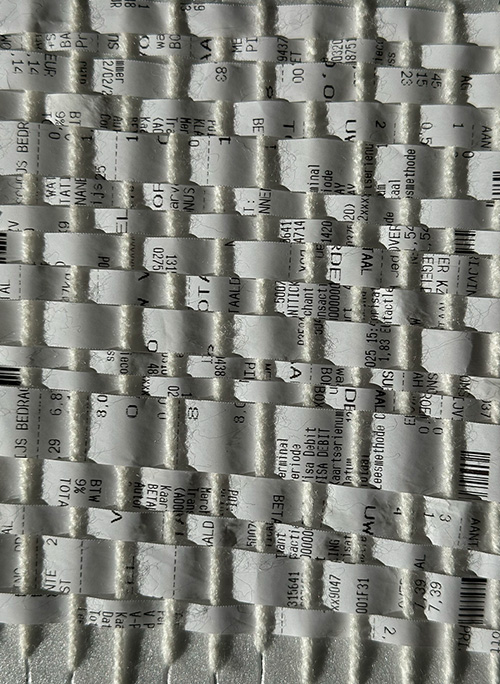
I loved the skill class we had in the introduction week of weaving. I asked if it would be possible to set up my weaving machine, only this would prob take me 2 days to do so. So she recommended I do some small tests and make my small frame to do so. I was aiming to see that I like the visual part of the weaving with receipts.
01 - I made frames from material I found in the trash bunker. Then I cut every cm. 02 - In each cut I stretched a thread of wool all the way through. 03 - I wove the receipts through the thread using an alternating pattern. 04 - For the next frame, I had no wool but the receipts stretched vertically, now everything is woven with the receipts.
Although I like the look of the outcome, I do not get inspired to continue with this experiment. Maybe I could use this as part of a design later on the project.
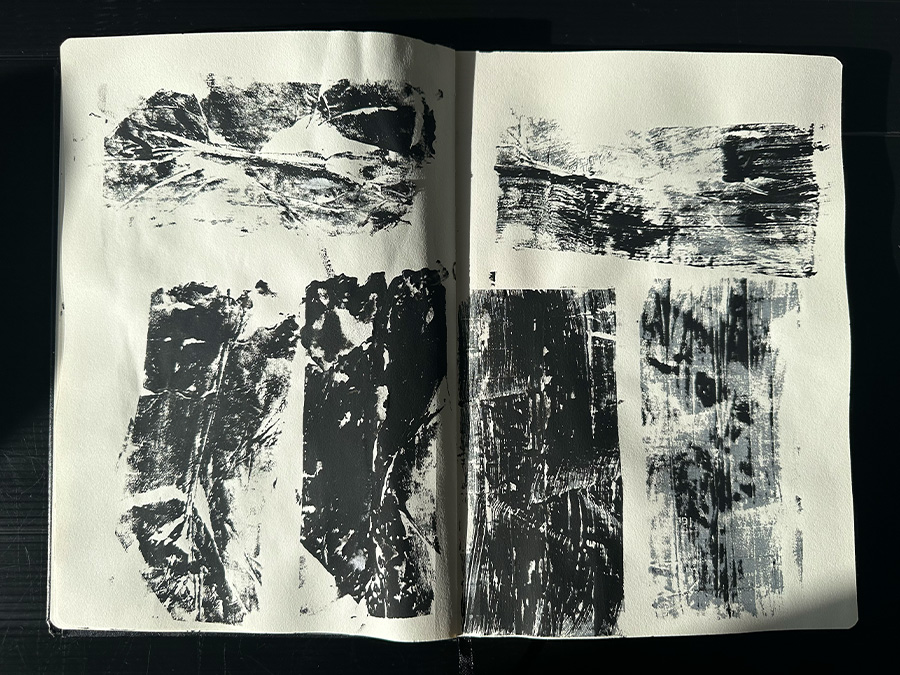
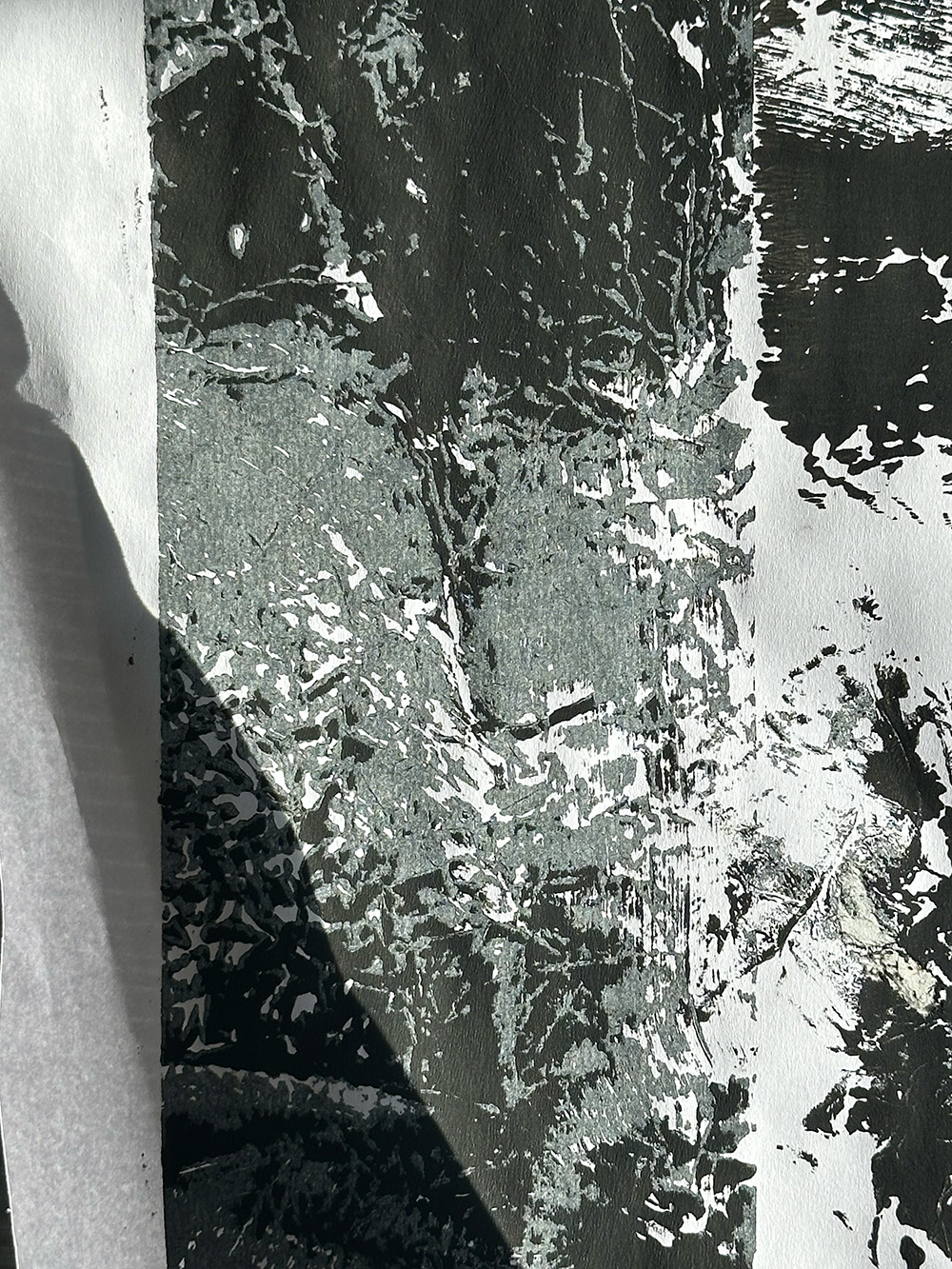
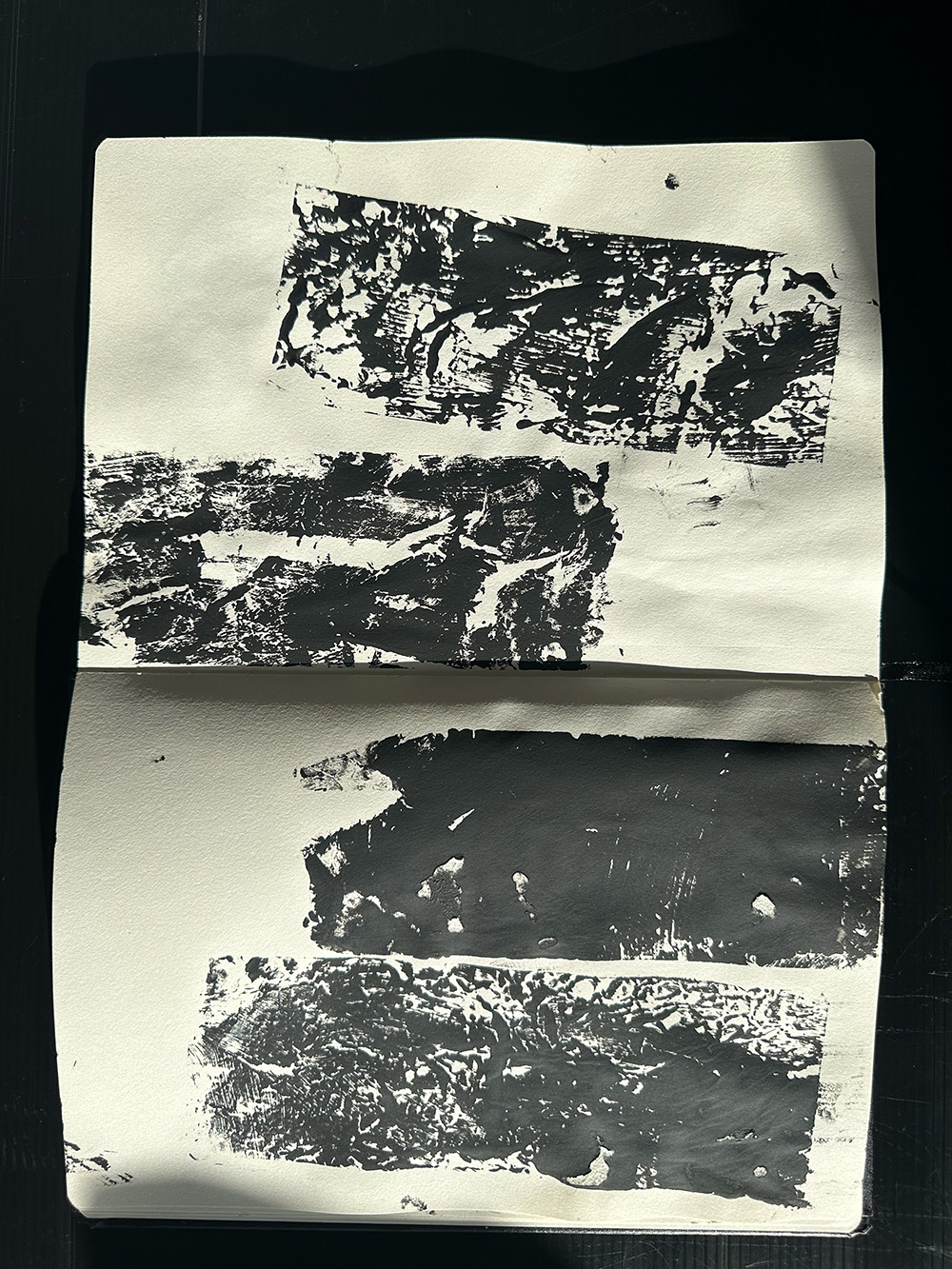
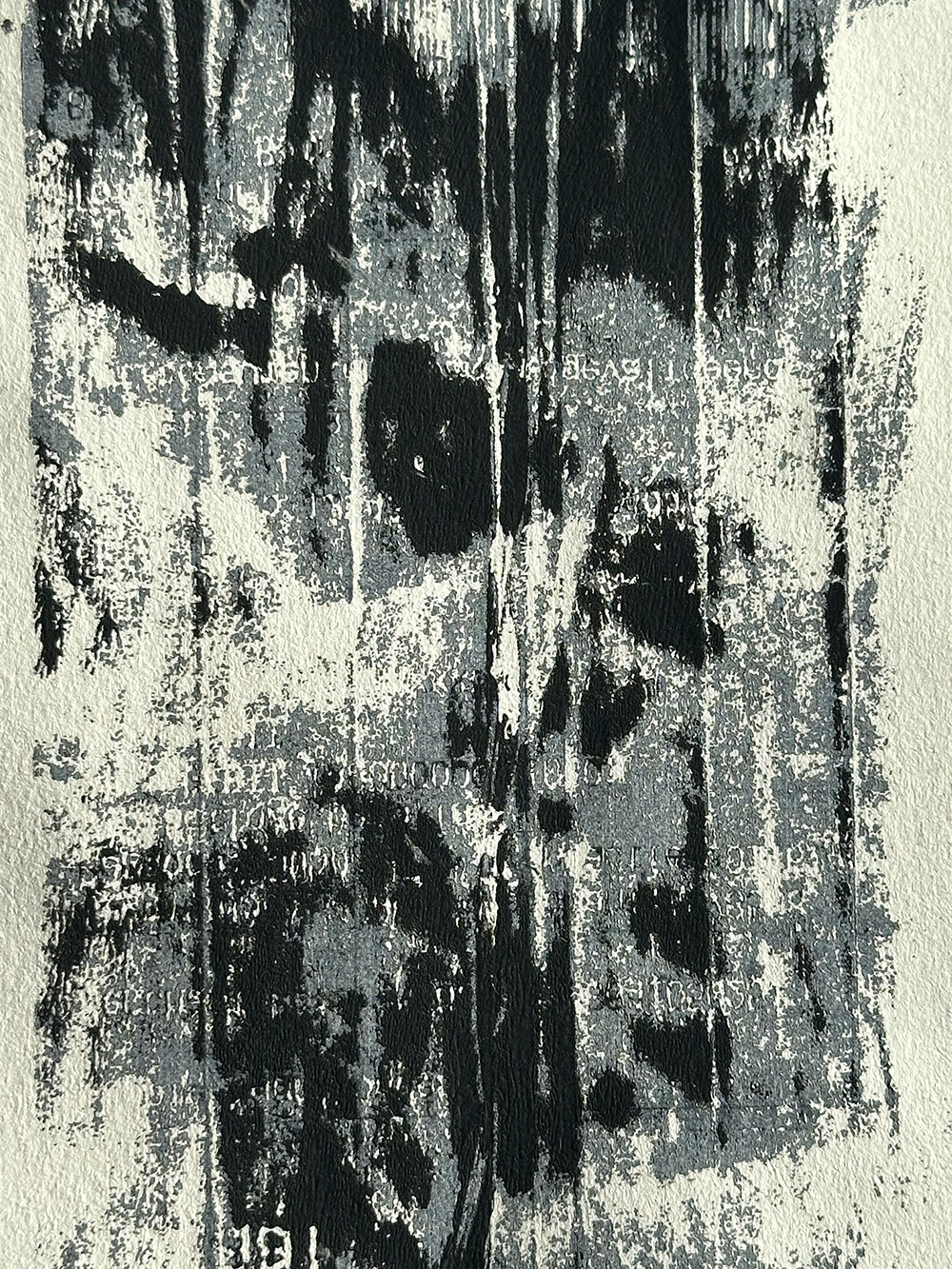
During the class with Britt, we worked on an experiment. I had the material black paint and of course my receipts. I wanted to see how it will look when it’s been coated/dipped into the paint, what will it print?
01 - Scrunching the receipts. 02 -Coating, well I more like soaking it in to the paint. 03 - coated it with a paintbrush to be continues. 04 - printed with the same receipt over and over again, with the same paint coat, to see which state I like the best.
It reminds me of one of my first experiments with the heating. Also on the Photoshop effect, Threshold. I love the way these prints turned out, wanting to do more and scan them in on high quality! Also, some of the prints I did have a very cool gray effect peaking there in the black paint. On those spots, the letters and original print on the receipt turned white. Surprising outcome I’d say!
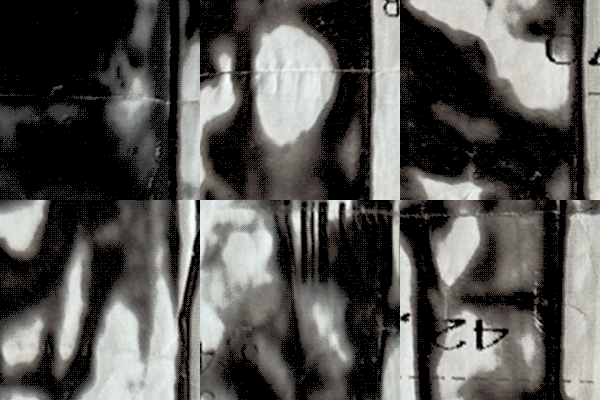
In class, I had an inspiring talk with Britt who pointed out that I could see and find letters in my experiment 03 Tie-Dye Heating. I have not looked that way at my outcome! For this experiment, I want to make some more squared grids where I can than find some letters.
01 - I’m currently trining to re do the squared folding and iron this, just like I did in the 03 exercise,,,, but its not working like it did before, so I used the results from experiment 03. If I would like to continue this experiment further, I would retry.
Finding the letters was unexpected. When the heat settles into the folds of the paper, it creates the letters. I think the effect the thermal paper has on heat is very cool and inspiring. My question for the future is how I can best influence this technique and make it more predictable.
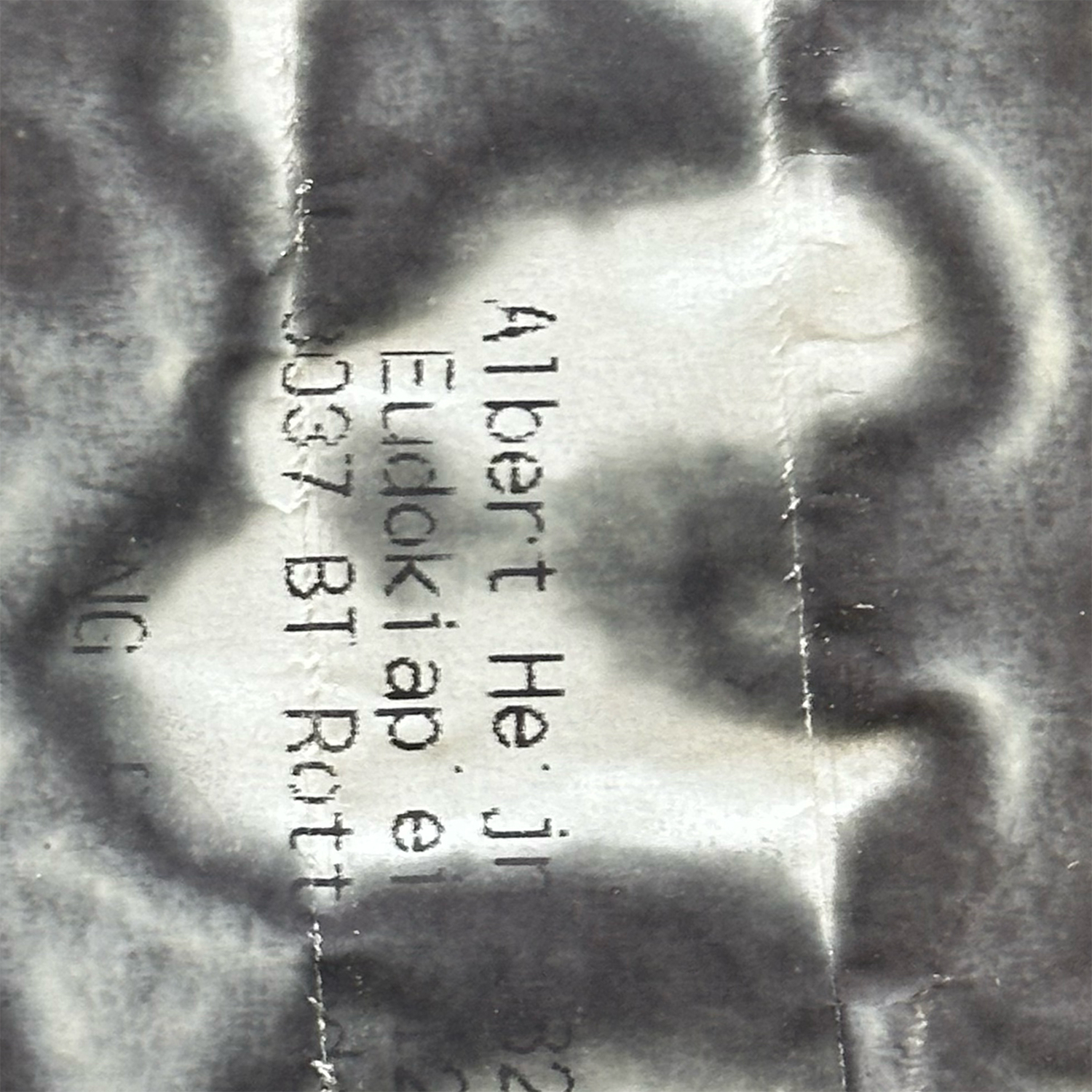
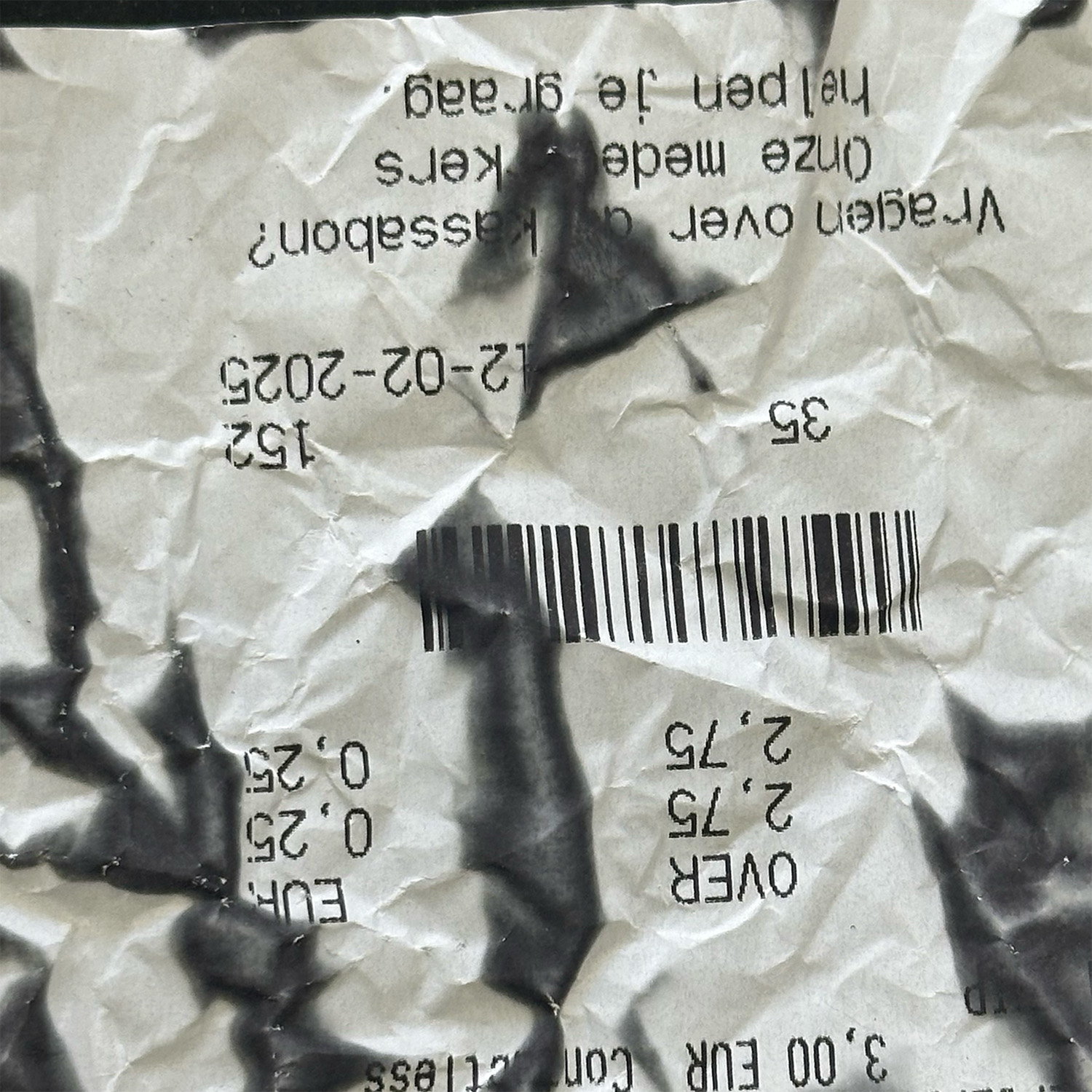
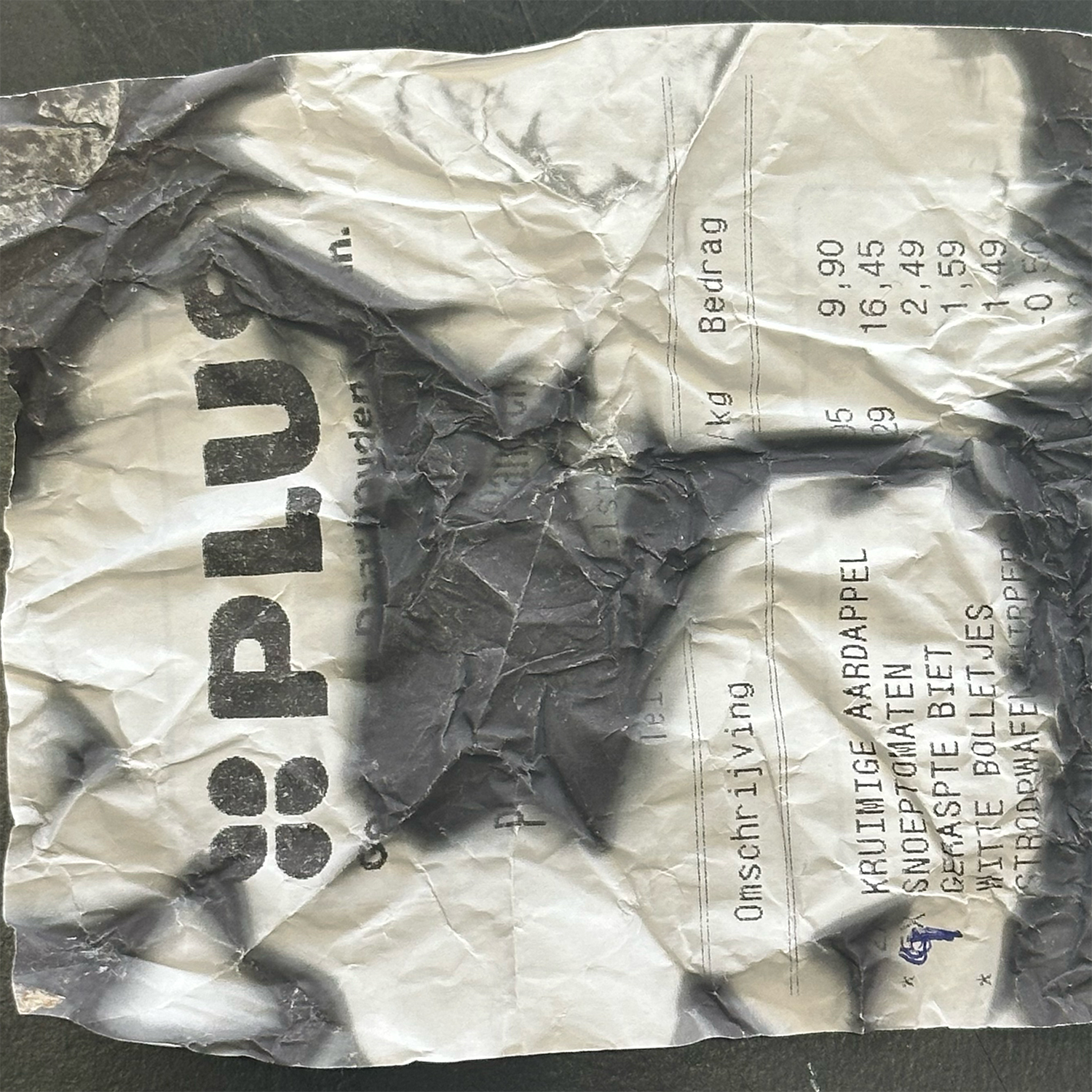
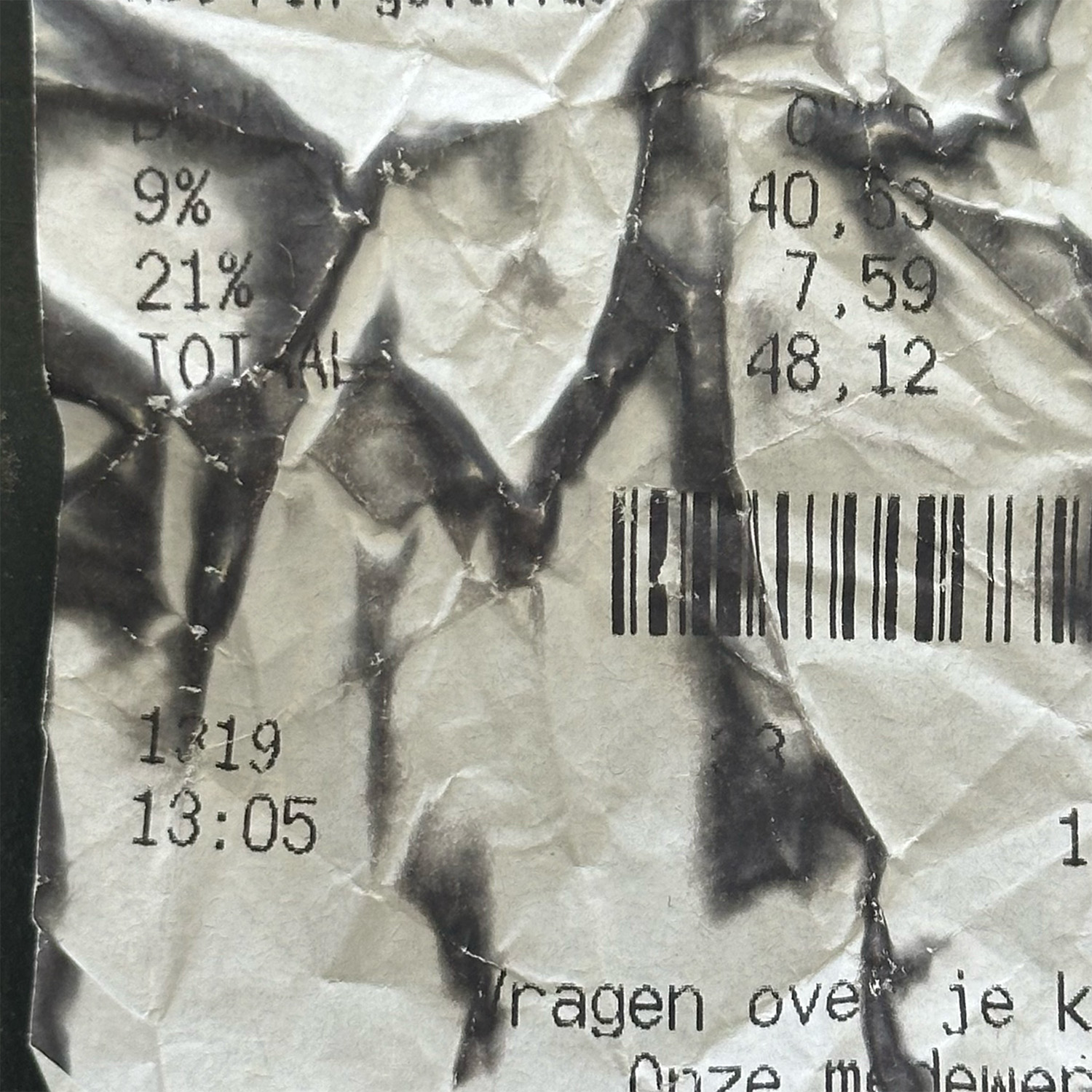
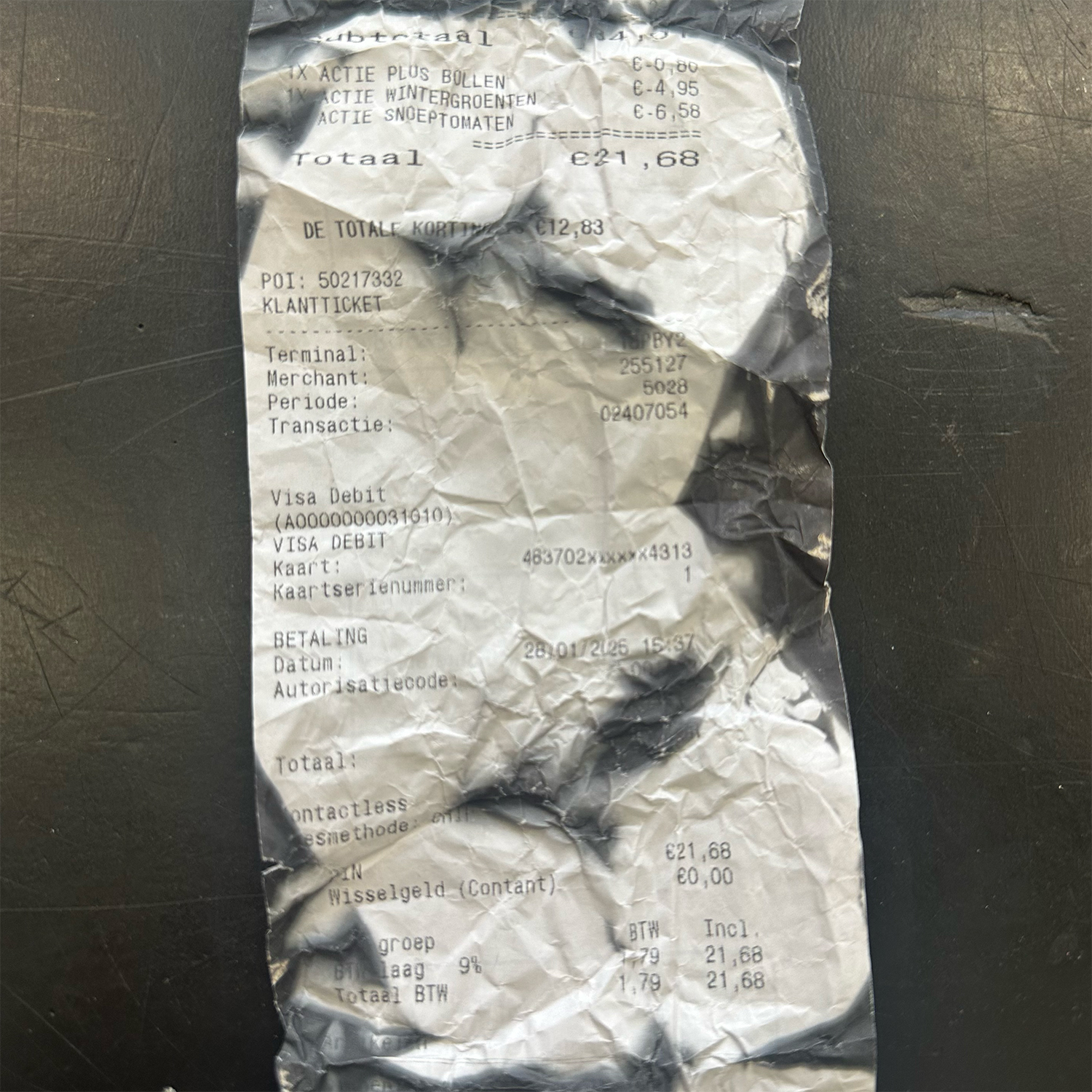
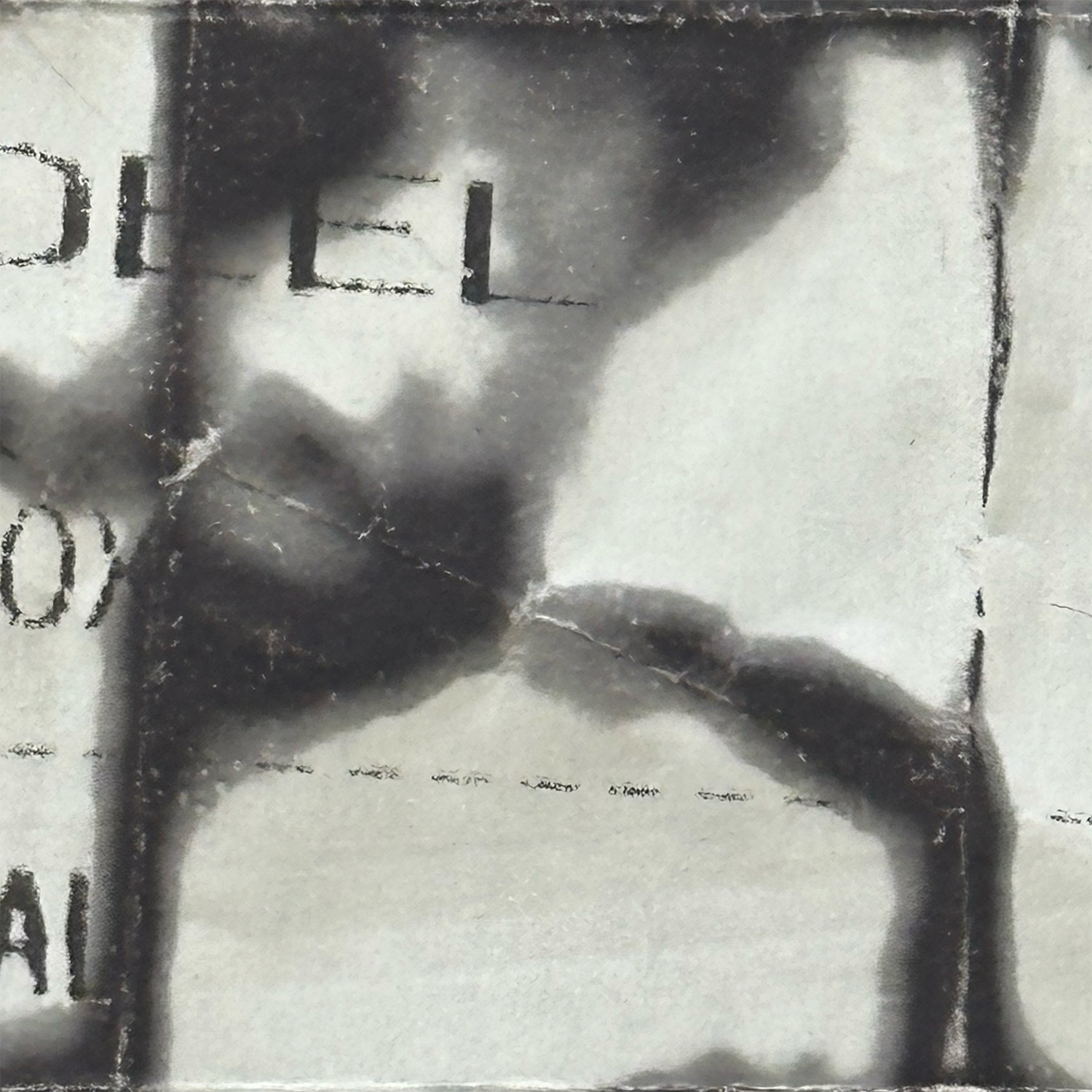
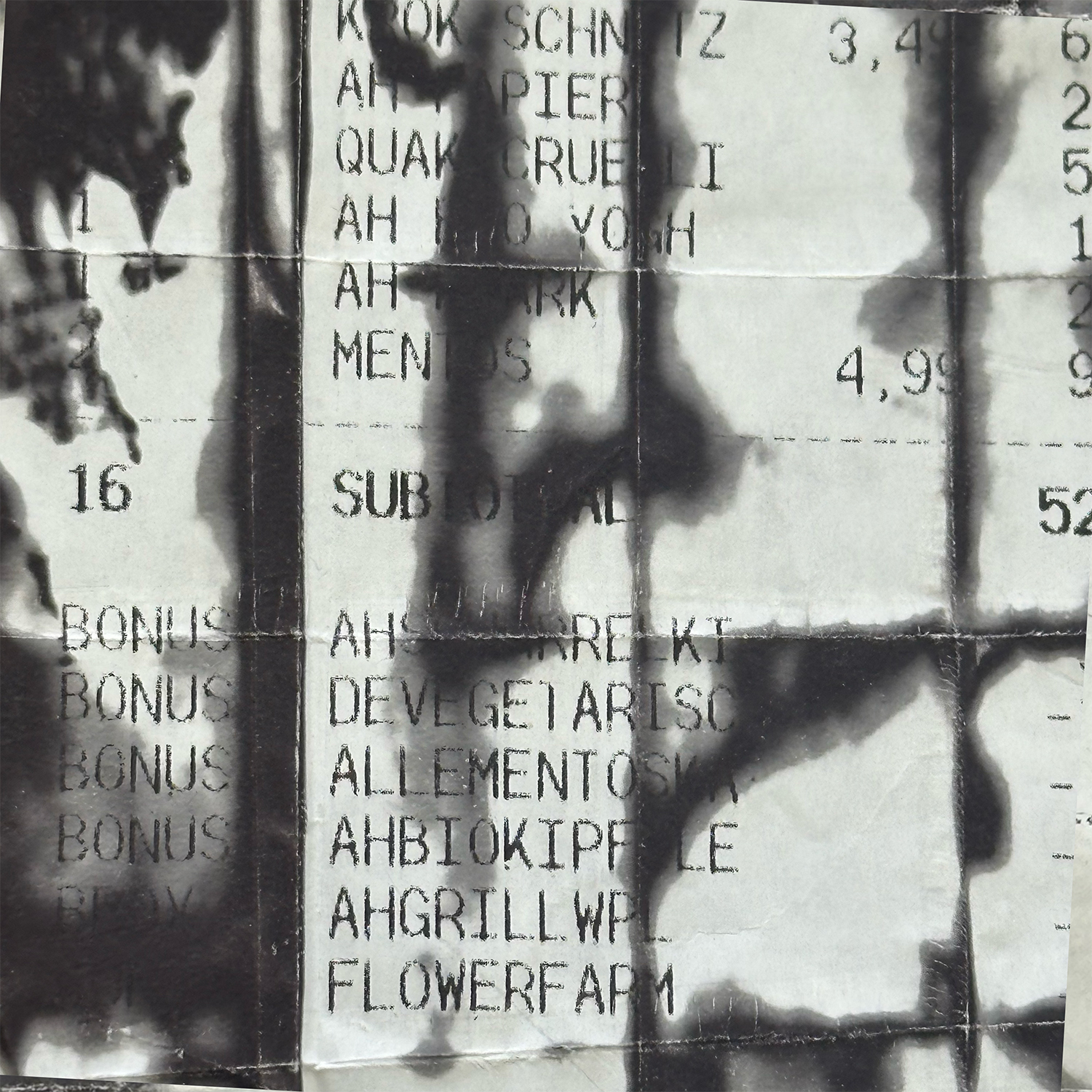
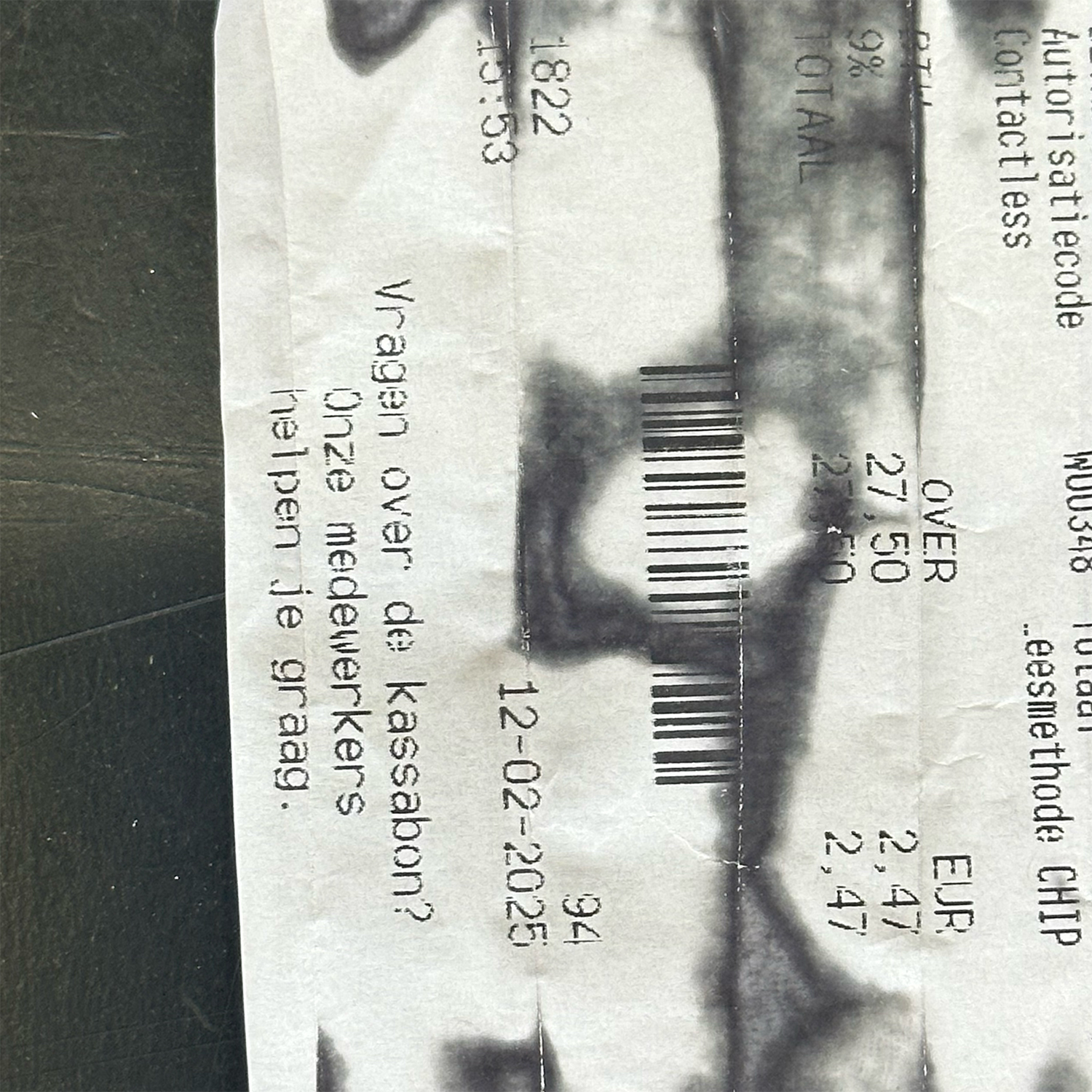
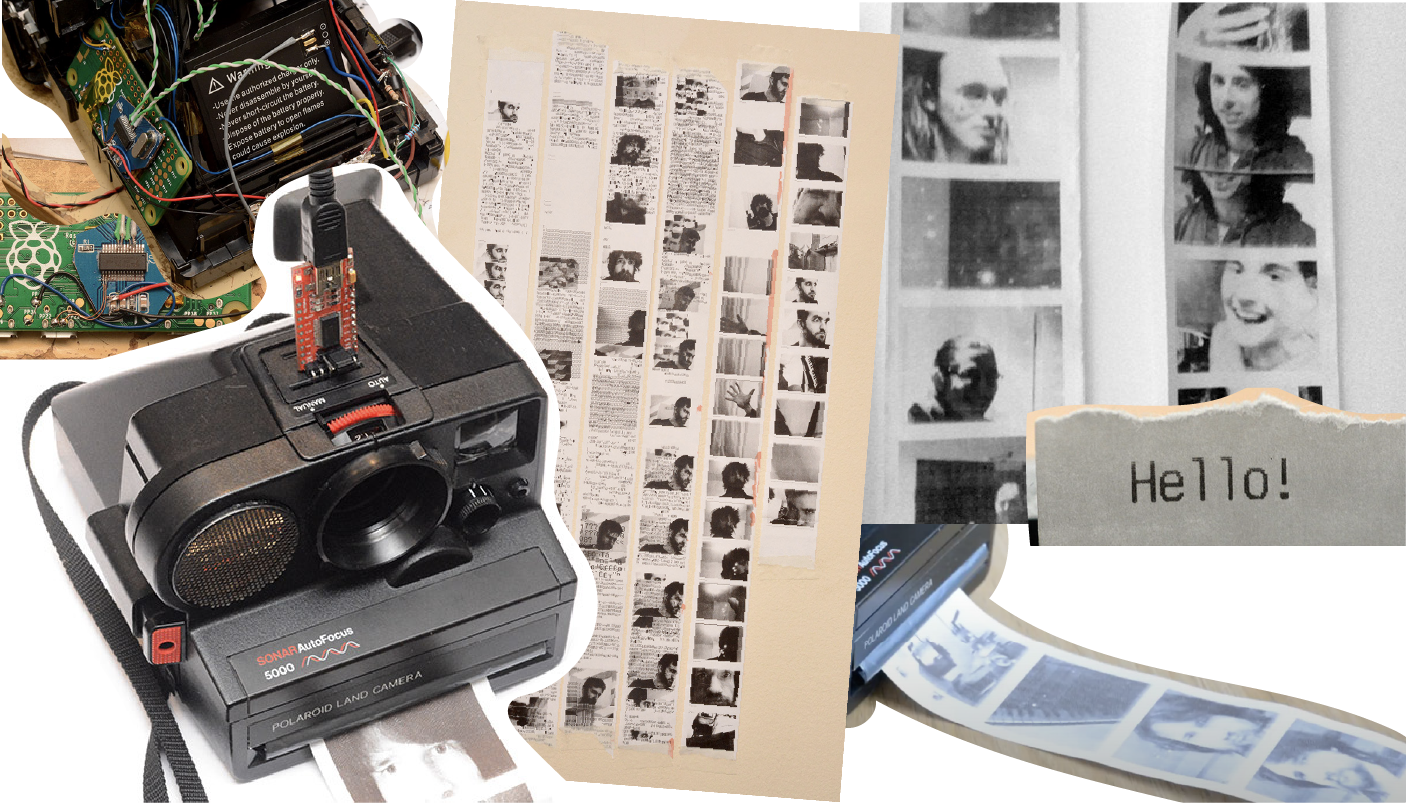
I again looked at one of the results of my experiment 03, Tie-dye heating. It reminded me of a film strip, that still needed to be developed. Im aiming to make an animation of the folded squares.
01 - I’m currently trining to re do the squared folding and iron this, just like I did in the 3rd exercise,,,, but its not working like it did before, so I used the results from that experiment. If I would like to continue this experiment further, I would retry better.
I thought my vision was very clear, but when it came time to do it, I didn't know how to start. The effect was difficult and led to a dead end.
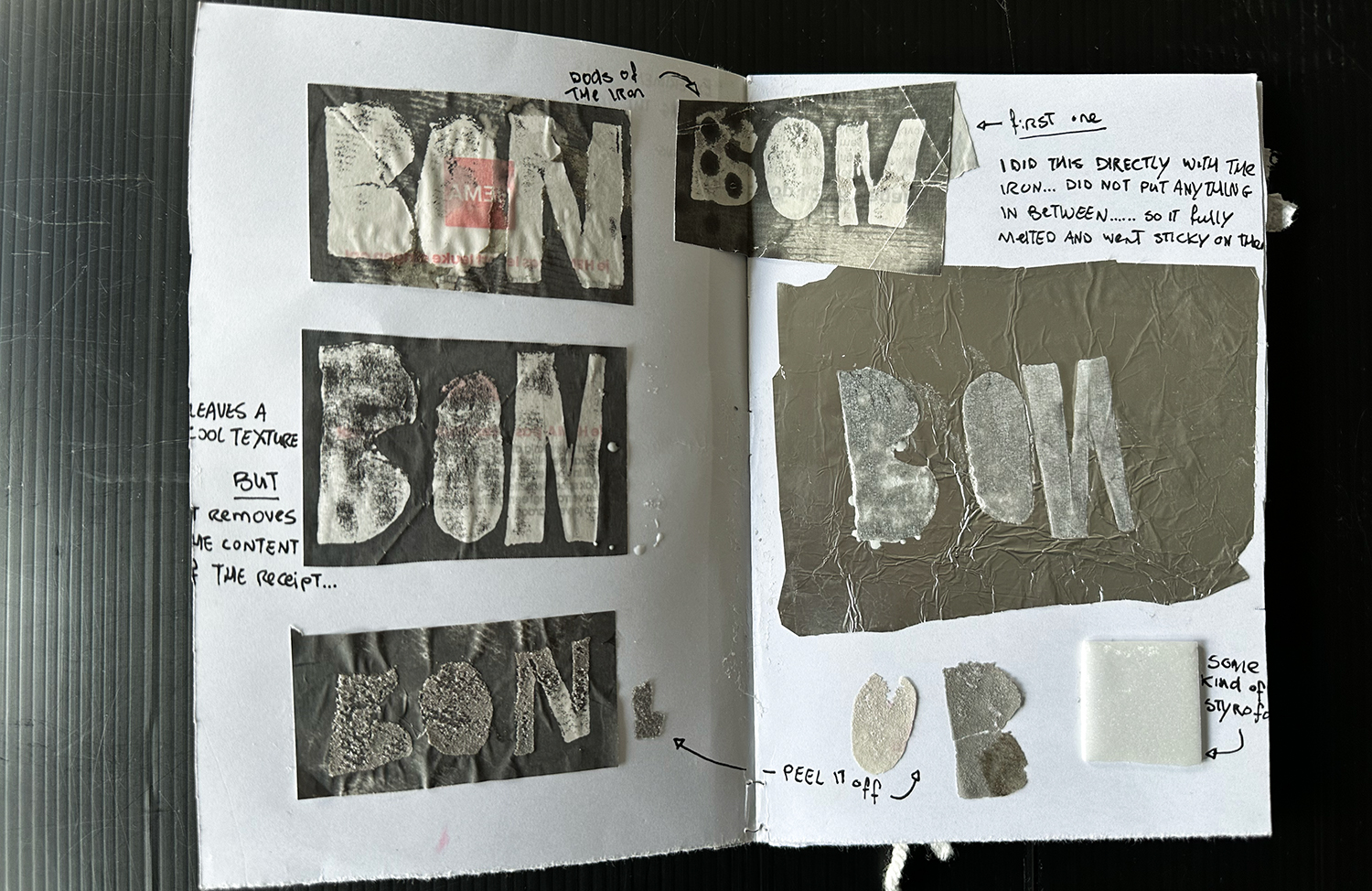
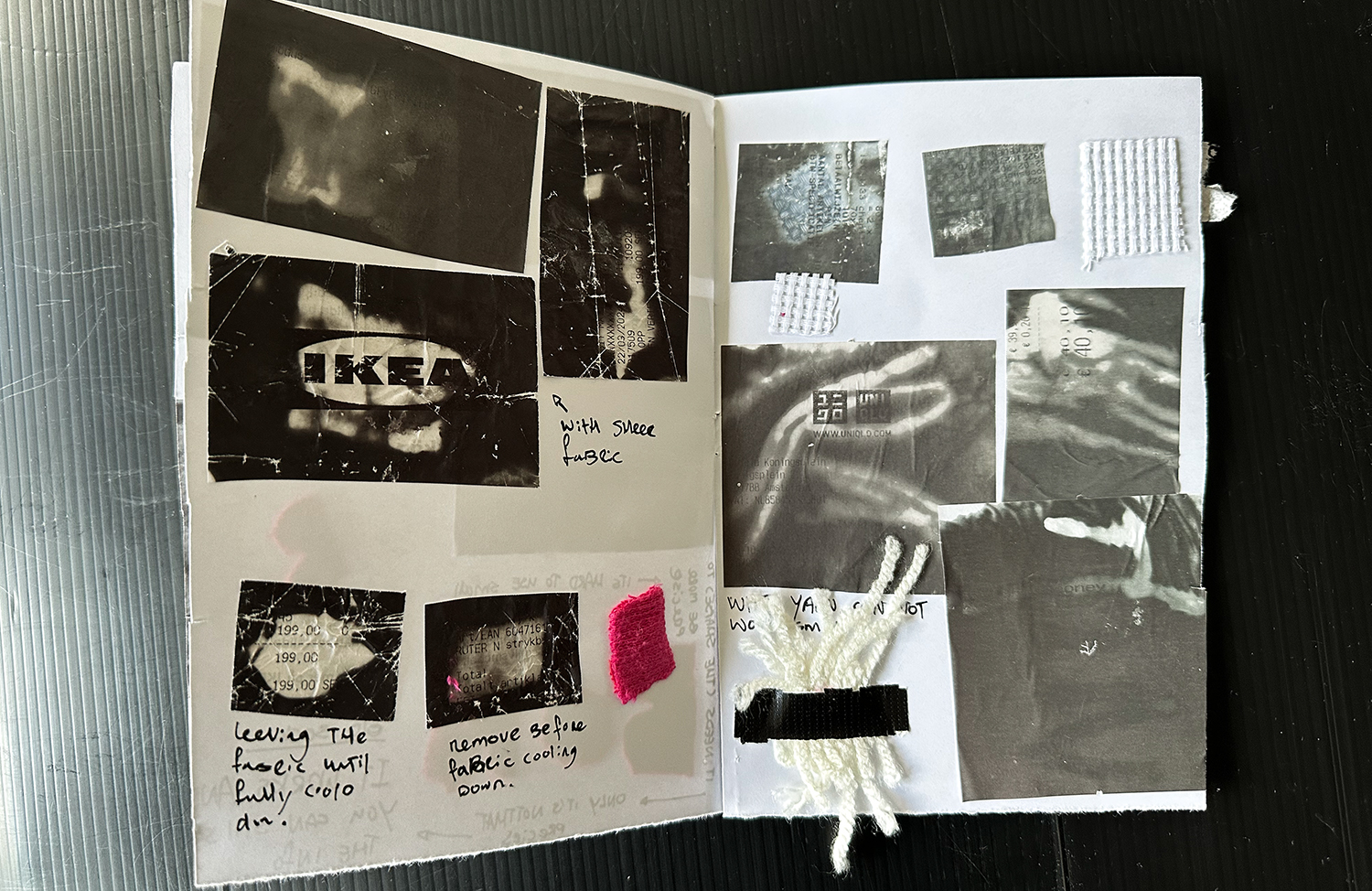
I focused on finding a way to make letters/words with heat + another material. So that I can continue toward my end product. I want to do something with the branding and packaging of a recycled sketchbook.
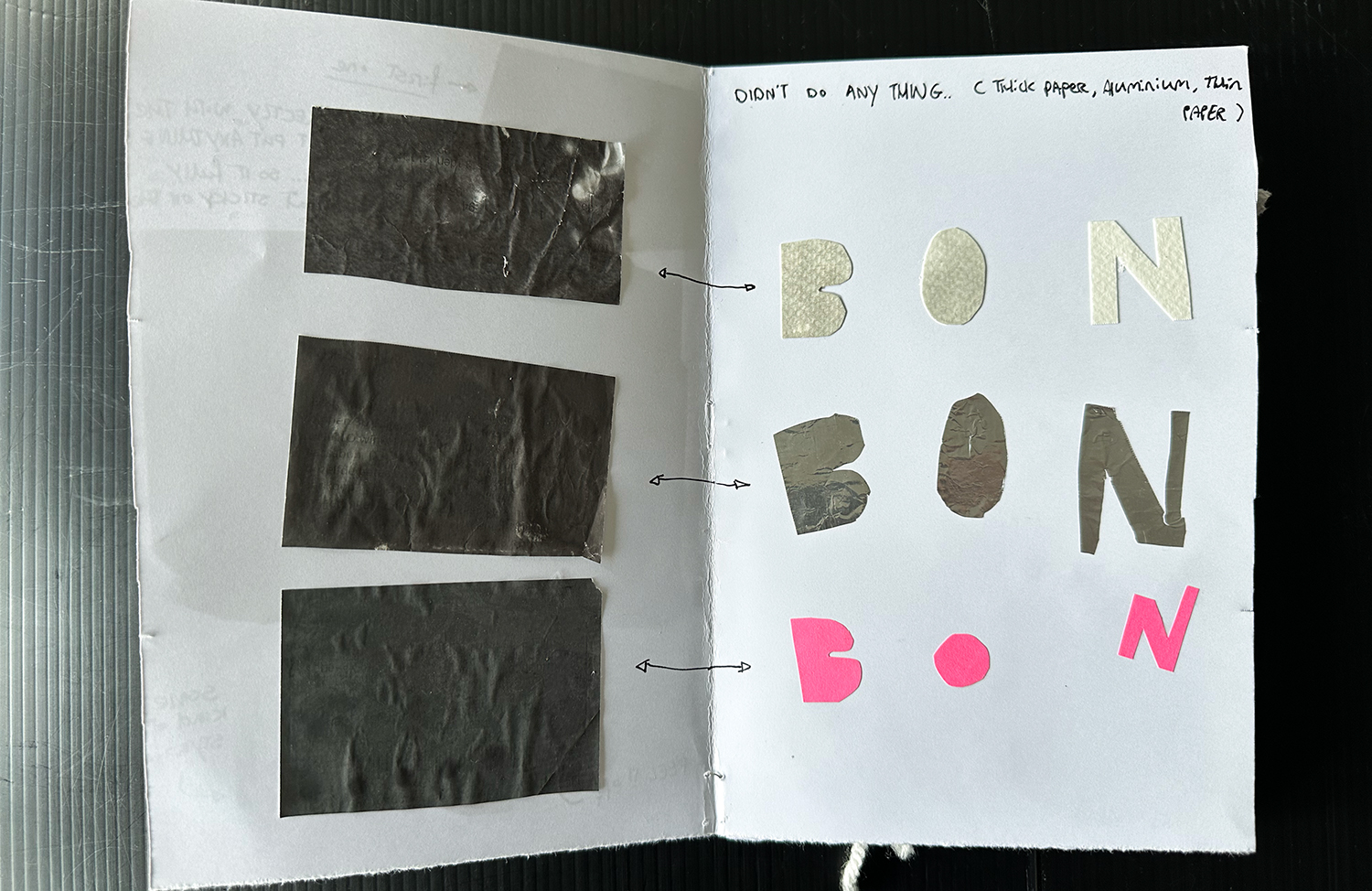
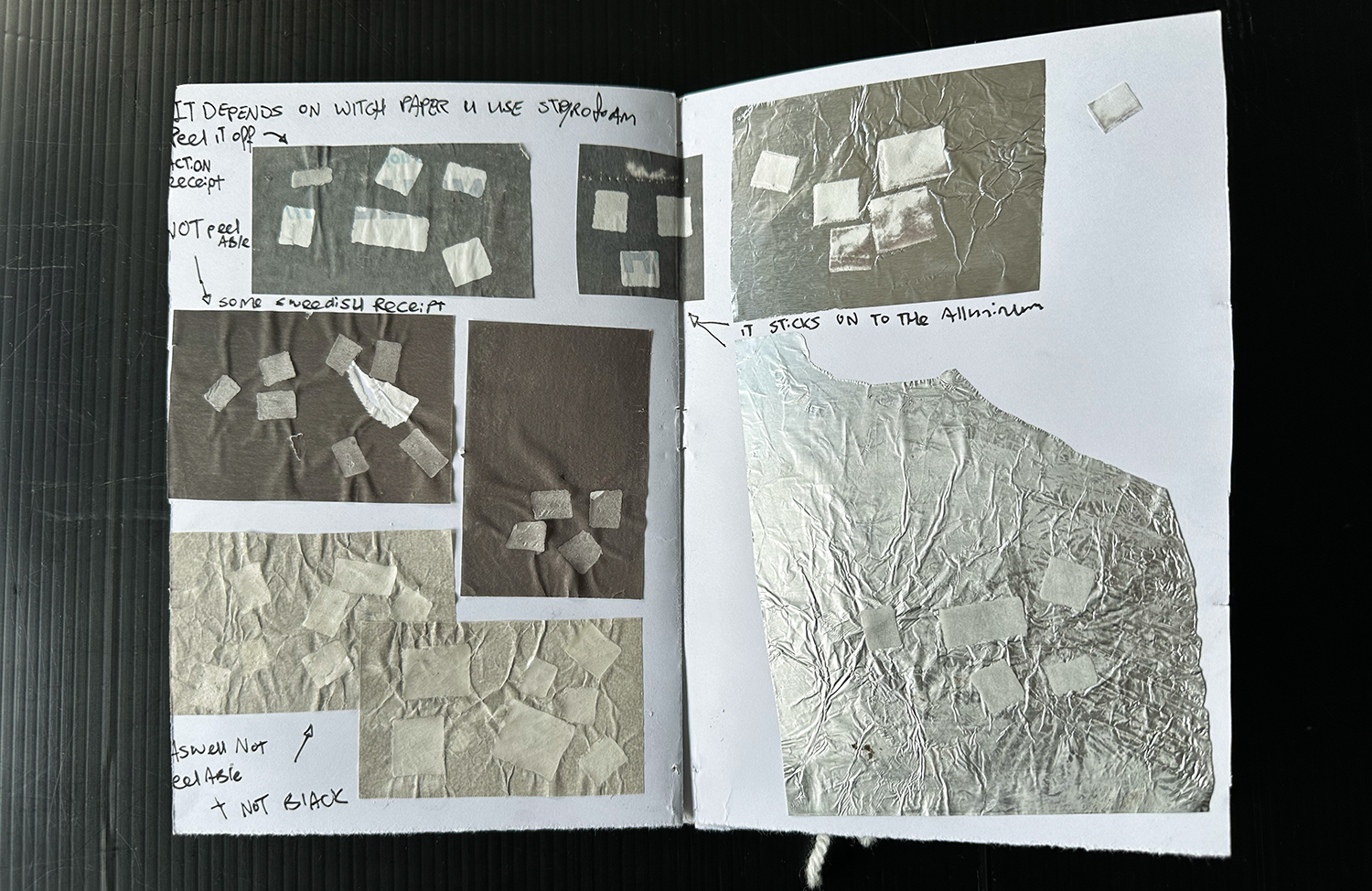
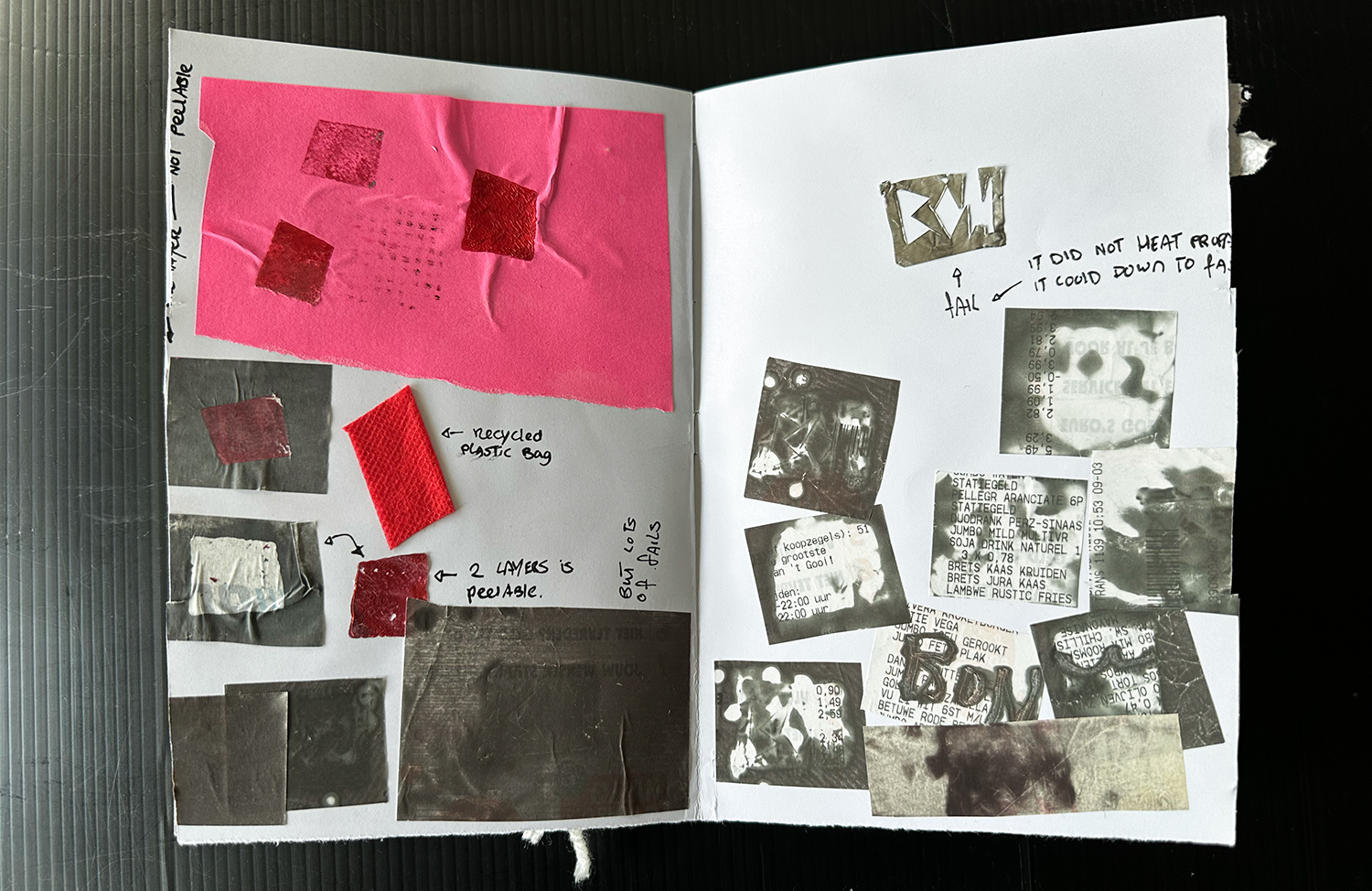
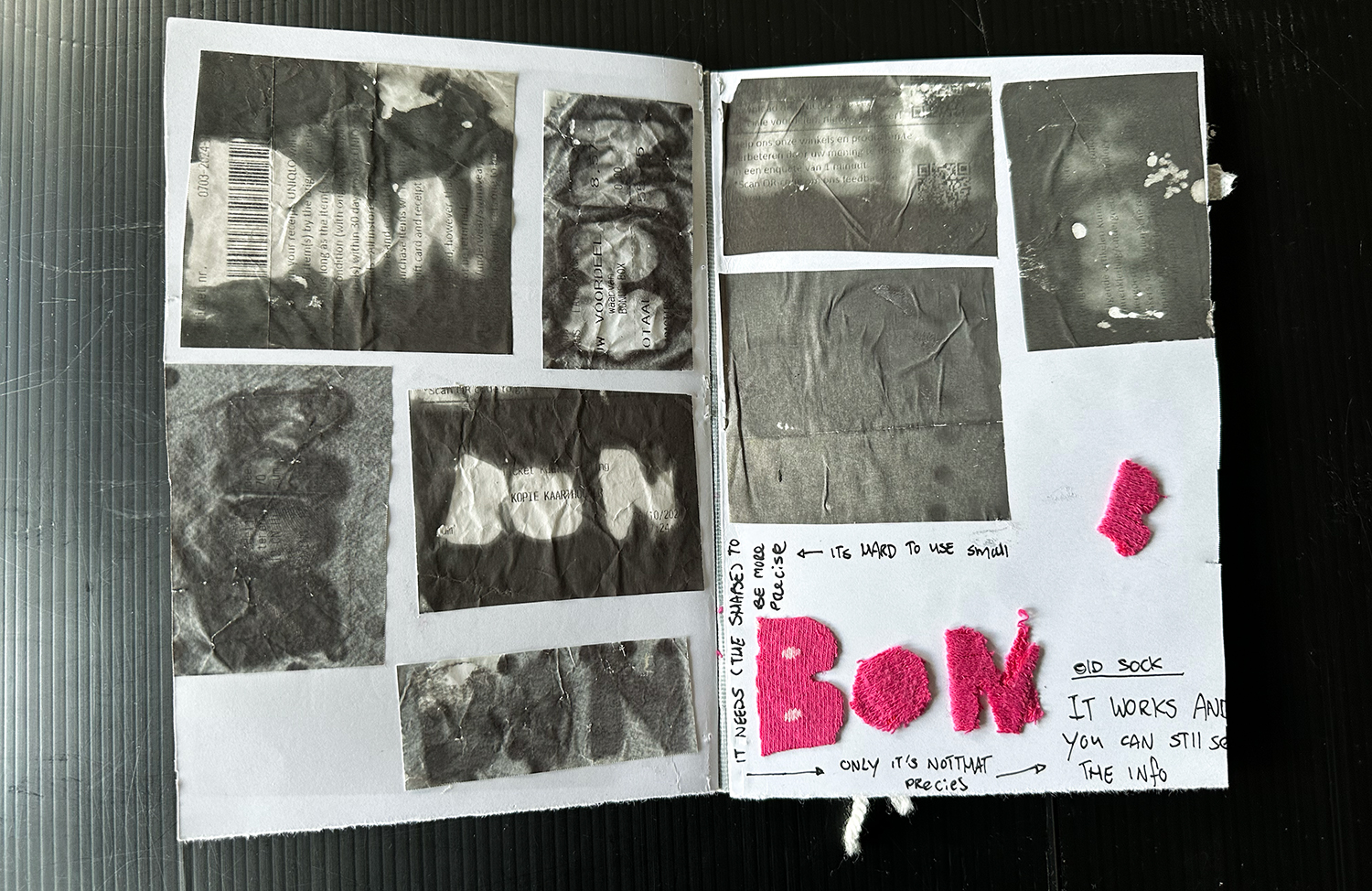
See the steps I made in the booklet, in the images. I have used various methods and techniques to come up with new findings on making letters.
I thought the first technique I used when masking Styrofoam was very cool: the distracted look. It's a shame that with this technique, the printing on the receipt also disappears, so you can't clearly see that it was once a receipt. To maintain the most control in your design, it is best to work with a metal paper clip.
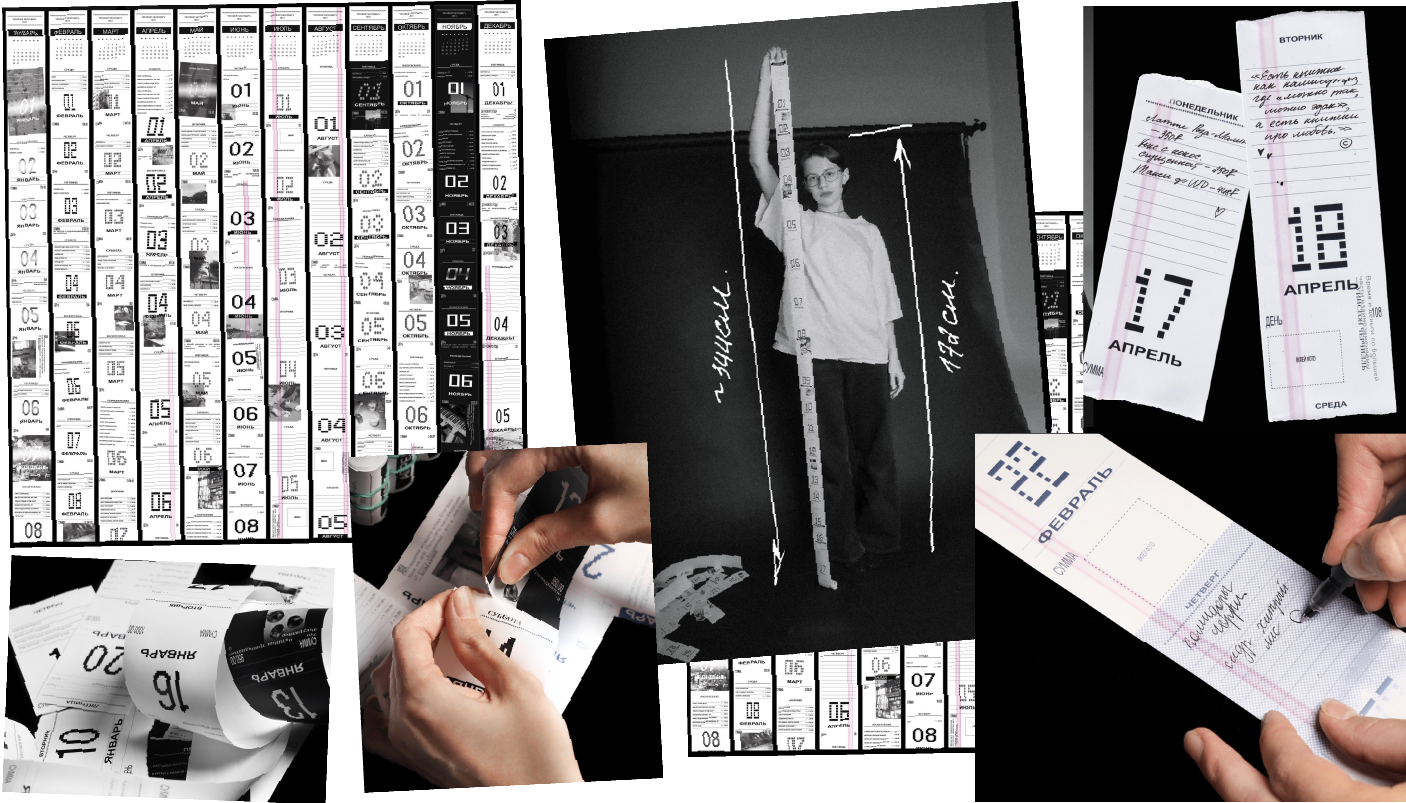
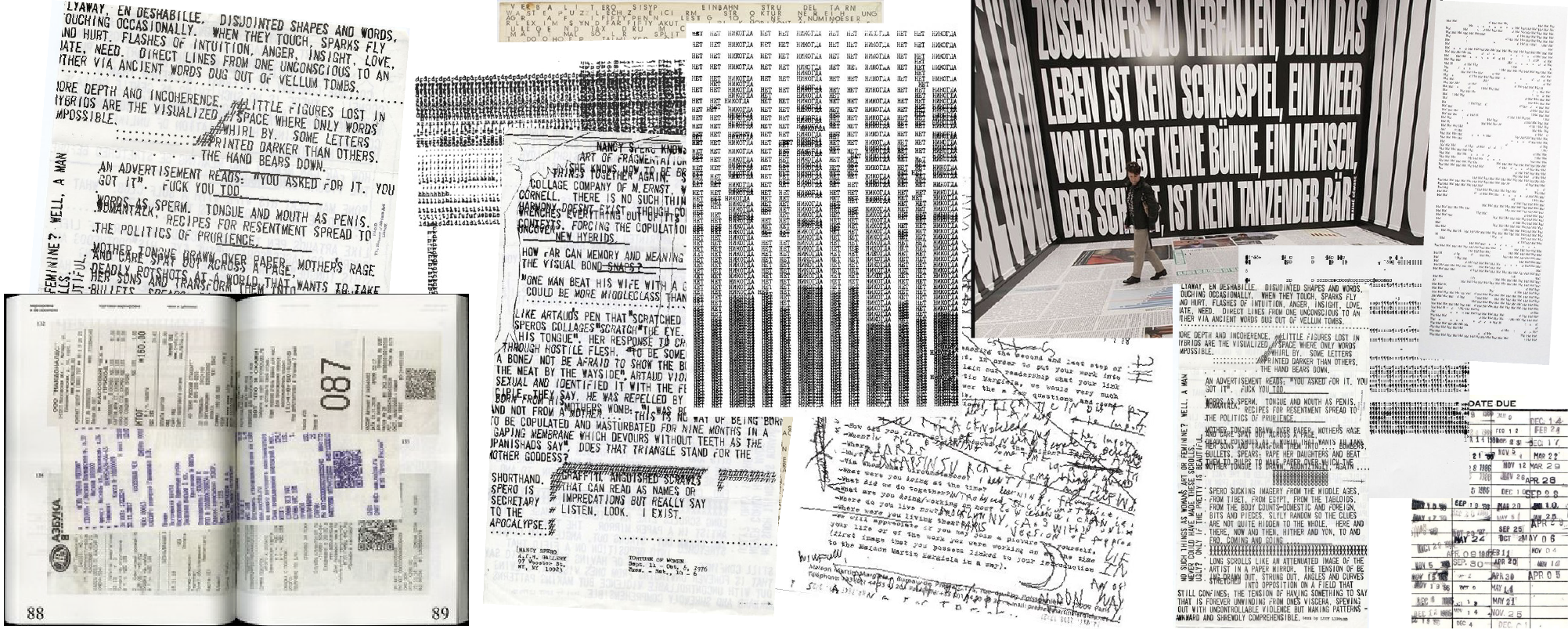
Whenever I receive a receipt—though I usually decline it—I either crumple it up and shove it into my pocket or bag, only for it to eventually end up in the trash. Sometimes, I use receipts to split an amount afterward, like when I go out for dinner with friends. Other times, I hold onto them after a city trip, collecting receipts from stores, supermarkets, and restaurants to use in my scrapbook or scan for a photobook/design project. But more often than not, they just accumulate in every bag I own or end up scattered around my room and in random drawers.
So, when I heard we had to choose a material for this project, my first instinct was to pick something that could be recycled. The options I considered were safety matches, shells from the beach, and receipts. I decided to go with receipts because I found their characteristics the most interesting—their thin, flexible texture, the way they crumple and fold, and their ephemeral nature. The affordance of receipts also played a role in my choice. Ultimately, they felt like the perfect material to recycle/upcycle for this project.
Affordances are cues that suggest how something can be interacted with—not just its function, but its potential. This relationship varies for everyone, human or nonhuman, and can be false, hidden, or perceptual. How might someone or something else relate to this material?
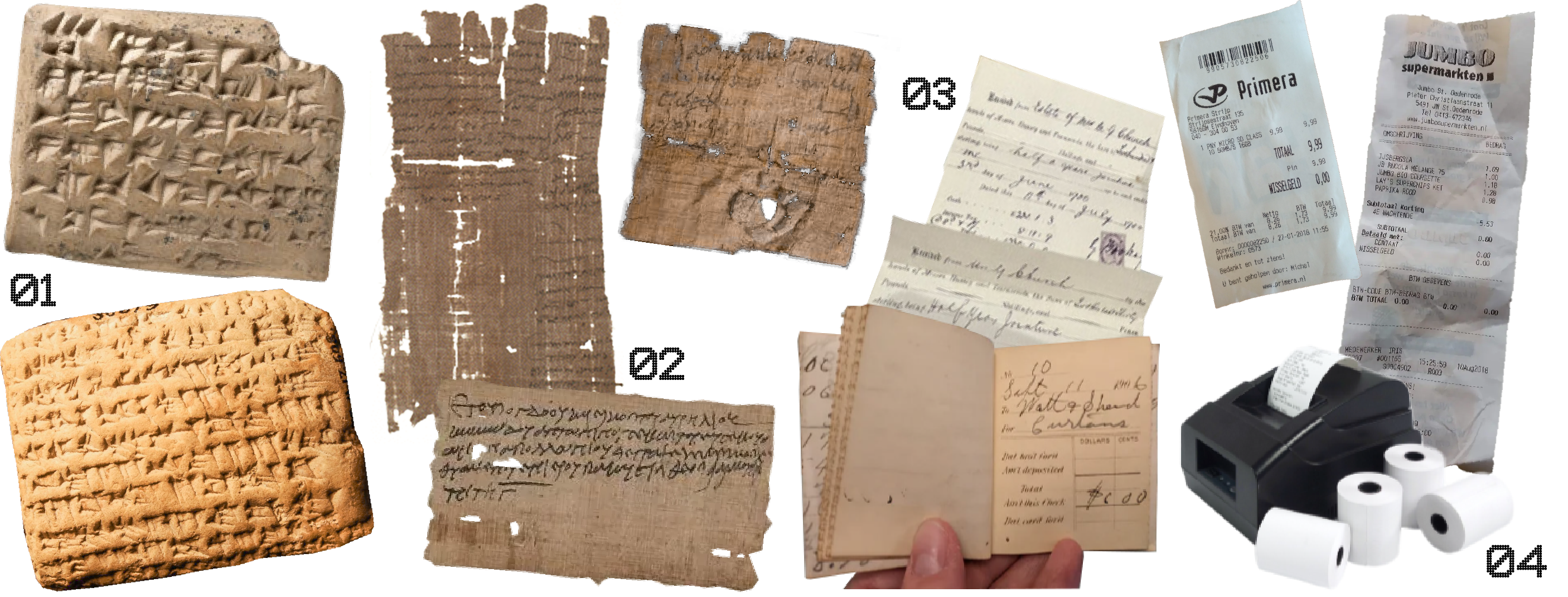
Source: www.bpcuk-com www.prn.nl
(01) C.a. 5,000 years ago in Mesopotamia, the wealthy used clay block receipts to document purchases, like cattle, livestock, grain, and beer.
(02) The Egyptians later used papyrus for receipts, mainly for tax purposes.
(03) In the 14th century, after the invention of the printing press, receipts became more common. Banks used printed receipt books for gold trading, but as demand grew, a more efficient printing method was needed.
(04) In the late 19th to early 20th century, there was a mechanical cash register developed that generated receipts.